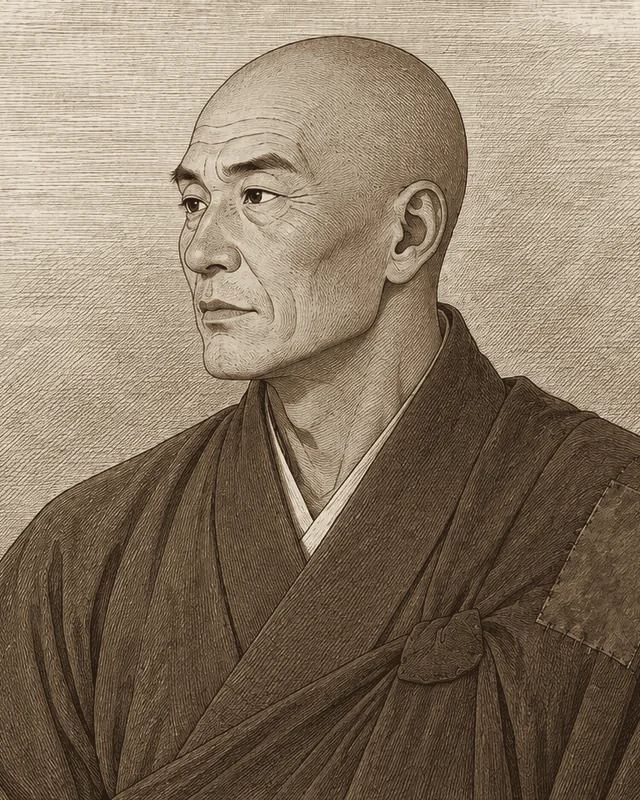
- 1320
He was born in Yeonghae-bu on the 15th day of the first lunar month. His family name was A (牙), and his first name was Wonhye. Record
Yi Saek, 'Stupa inscription of the Venerable Boje, posthumously titled Seongak' (普濟尊者諡禪覺塔銘, 1377) — Complete Works of Korean Buddhism, vol. 6, 709a–711a, Dongguk University ABC ABC_BJ_H0103_T_003 710a–b (延祐庚申正月十五日生) · Gakgoeng, 'Biography of the Venerable Naong' (懶翁和尙行狀) — Complete Works of Korean Buddhism, vol. 6, 703a–709a, ABC_BJ_H0103_T_002 · Encyclopedia of Korean Culture, 'Hyegeun' Encykorea
- 1339
Around the age of twenty, when a friend next door died, he asked the elders, 'Where do people go when they die?', but no one knew. He went to Yoyeon on Mt Gongdeok and became a monk. Record
Yi Saek, 'Stupa inscription' (1377) — Complete Works of Korean Buddhism, vol. 6, 709a–711a, Dongguk University ABC ABC_BJ_H0103_T_003 710b (年甫冠 隣友亡 問諸父老曰 死何之) · Gakgoeng, 'Biography' — Complete Works of Korean Buddhism, vol. 6, 703a–709a, ABC_BJ_H0103_T_002 (年至二十) · Encyclopedia of Korean Culture, 'Hyegeun' Encykorea (1339, aged 20)
- 1344
He entered Hoeamsa temple in Yangju and practised sitting alone day and night. The biography records that after four years of hard practice he suddenly awakened. Record
Yi Saek, 'Stupa inscription' (1377) — Complete Works of Korean Buddhism, vol. 6, 709a–711a, Dongguk University ABC ABC_BJ_H0103_T_003 710b (至正甲申 至檜巖 晝夜獨坐 忽得開悟) · Gakgoeng, 'Biography' — Complete Works of Korean Buddhism, vol. 6, 703a–709a, ABC_BJ_H0103_T_002 (勤脩四載) · Encyclopedia of Korean Culture, 'Hyegeun' Encykorea (four years of practice)
- 1347–1350
He set out for Yuan China in the eleventh lunar month of 1347, met and studied under Jigong in Dadu in 1348, and met Pingshan Chulin in Jiangnan in 1350. Record
Gakgoeng, 'Biography' — Complete Works of Korean Buddhism, vol. 6, 703a–709a, ABC_BJ_H0103_T_002 (丁亥十一月 發足向北 · 戊子三月十三日 大都法源寺) · Yi Saek, 'Stupa inscription' (1377) — Complete Works of Korean Buddhism, vol. 6, 709a–711a, Dongguk University ABC ABC_BJ_H0103_T_003 710b (戊子三月 至燕都 叅指空 · 秋八月 叅平山) · Encyclopedia of Korean Culture, 'Hyegeun' Encykorea
- 1355
In the autumn, by order of the Yuan emperor, he stayed at Guangji Temple in Dadu. At the opening ceremony of his teaching on the 15th day of the tenth lunar month of the following year, the emperor sent an envoy (wonsa) to present him with a gold-brocade robe. Record
Yi Saek, 'Stupa inscription' (1377) — Complete Works of Korean Buddhism, vol. 6, 709a–711a, Dongguk University ABC ABC_BJ_H0103_T_003 710c (乙未秋 奉聖旨 住大都廣濟寺 · 帝遣院使) · Gakgoeng, 'Biography' — Complete Works of Korean Buddhism, vol. 6, 703a–709a, ABC_BJ_H0103_T_002 · Encyclopedia of Korean Culture, 'Hyegeun' Encykorea
- 1358
In the third lunar month he took leave of Jigong and returned to Goryeo, a little more than ten years after setting out for Yuan. Record
Gakgoeng, 'Biography' — Complete Works of Korean Buddhism, vol. 6, 703a–709a, ABC_BJ_H0103_T_002 (戊戌三月二十三日 禮辭指空) · Yi Saek, 'Stupa inscription' (1377) — Complete Works of Korean Buddhism, vol. 6, 709a–711a, Dongguk University ABC ABC_BJ_H0103_T_003 710c (戊戌春 辭指空) · Encyclopedia of Korean Culture, 'Hyegeun' Encykorea · Uri Yeoksanet, 'Naong Hyegeun' Urihistory
- 1361
In the winter King Gongmin summoned him to the palace, heard his teaching, and had him stay at Singwangsa temple. Record
Yi Saek, 'Stupa inscription' (1377) — Complete Works of Korean Buddhism, vol. 6, 709a–711a, Dongguk University ABC ABC_BJ_H0103_T_003 710c (辛丑冬 … 請住神光寺) · Gakgoeng, 'Biography' — Complete Works of Korean Buddhism, vol. 6, 703a–709a, ABC_BJ_H0103_T_002 · Encyclopedia of Korean Culture, 'Hyegeun' Encykorea
- 1361
In the eleventh lunar month, when the Red Turbans swept through the capital region, the monks begged him to flee. He answered, 'I only keep to my fate (命); what can the bandits do?' Record
Yi Saek, 'Stupa inscription' (1377) — Complete Works of Korean Buddhism, vol. 6, 709a–711a, Dongguk University ABC ABC_BJ_H0103_T_003 710c (唯命是保 賊何能爲) · Gakgoeng, 'Biography' — Complete Works of Korean Buddhism, vol. 6, 703a–709a, ABC_BJ_H0103_T_002 (唯命是保 賊軰何關汝事)
- 1370
In the ninth lunar month he presided at Gwangmyeongsa over the gongbuseon (功夫選), an examination of monks' practice, which King Gongmin came to watch in person. Record
Yi Saek, 'Stupa inscription' (1377) — Complete Works of Korean Buddhism, vol. 6, 709a–711a, Dongguk University ABC ABC_BJ_H0103_T_003 709a–b · Gakgoeng, 'Biography' — Complete Works of Korean Buddhism, vol. 6, 703a–709a, ABC_BJ_H0103_T_002 · Encyclopedia of Korean Culture, 'Hyegeun' Encykorea
- 1371
On the 26th day of the eighth lunar month he was invested as royal teacher to King Gongmin, received the title 'Boje Jonja', and came to stay at Songgwangsa temple. Record
Yi Saek, 'Stupa inscription' (1377) — Complete Works of Korean Buddhism, vol. 6, 709a–711a, Dongguk University ABC ABC_BJ_H0103_T_003 709b (辛亥八月二十六日 … 封爲王師) · Gakgoeng, 'Biography' — Complete Works of Korean Buddhism, vol. 6, 703a–709a, ABC_BJ_H0103_T_002 · Encyclopedia of Korean Culture, 'Hyegeun' Encykorea
- 1372–1376
In the autumn of 1372 he moved to Hoeamsa, and, carrying on the wish of his teacher Jigong, led the work of rebuilding Hoeamsa on a large scale. His disciple Gakgoeng's biography records that when, at the king's request, he came to stay at Hoeamsa again in the spring of 1374, he had the community rebuild its halls. Record
Encyclopedia of Korean Culture, 'Hyegeun' Encykorea (rebuilding begun 1374) · Uri Yeoksanet, 'Naong Hyegeun' Urihistory (from 1374) · Yi Saek, 'Stupa inscription' (1377) — Complete Works of Korean Buddhism, vol. 6, 709a–711a, Dongguk University ABC ABC_BJ_H0103_T_003 709b (壬子秋 … 欲移錫檜巖 … 得請居焉 … 迺謀於衆 增廣殿宇 工旣告畢 丙辰四月 大設落成之會 — does not give the starting year) · Gakgoeng, 'Biography' — Complete Works of Korean Buddhism, vol. 6, ABC_BJ_H0103_T_002 707b
- 1376
On the 15th day of the fourth lunar month, people high and low flocked to the ceremony celebrating the completion of Hoeamsa until the temple gate was jammed. The History of Goryeo records that the Office of the Inspector-General (Saheonbu) and the State Council (Dodang) tried to stop it but could not. The court ordered him moved to Yeongwonsa temple in Milseong. Record
History of Goryeo (Goryeosa), juan 133, biographies 46, King U, year 2, 4th month · Essentials of the History of Goryeo (Goryeosa jeoryo), juan 30, King U, year 2, 4th month (original text at zh.wikisource) (中外士女 無貴賤 … 放于慶尙道密城郡) · Yi Saek, 'Stupa inscription' (1377) — Complete Works of Korean Buddhism, vol. 6, 709a–711a, Dongguk University ABC ABC_BJ_H0103_T_003 709b (移住瑩源寺) · Gakgoeng, 'Biography' — Complete Works of Korean Buddhism, vol. 6, 703a–709a, ABC_BJ_H0103_T_002 (四月十五日 大設落成會) · Encyclopedia of Korean Culture, 'Bell-shaped stupa of the Venerable Boje at Silleuksa, Yeoju' E0032895 (Yeongwonsa in Miryang)
- 1376
Leaving while ill, he said to the weeping crowd, 'Strive, and strive; do not give up because of me.' After seven days going upriver by boat he reached Silleuksa in Yeoheung, and he died there in the morning (the hour of jin) on the 15th day of the fifth lunar month. Record
Yi Saek, 'Stupa inscription' (1377) — Complete Works of Korean Buddhism, vol. 6, 709a–711a, Dongguk University ABC ABC_BJ_H0103_T_003 710a (努力努力 無以余故中輟也 · 泝流七日 · 五月十五日 … 辰時 寂然而逝) · Gakgoeng, 'Biography' — Complete Works of Korean Buddhism, vol. 6, 703a–709a, ABC_BJ_H0103_T_002 · History of Goryeo, juan 133, biographies 46, King U, year 2, 4th month · Essentials of the History of Goryeo, juan 30, King U, year 2, 4th month (original text at zh.wikisource) (行至驪興神勒寺死)
- 1377
The court conferred on him the posthumous title 'Seongak' (禪覺), and a stele bearing the stupa inscription written by Yi Saek was erected at Hoeamsa. Record
Yi Saek, 'Stupa inscription' (1377) — Complete Works of Korean Buddhism, vol. 6, 709a–711a, Dongguk University ABC ABC_BJ_H0103_T_003 710a, 711a (諡曰禪覺 命臣穡爲文 · 宣光七年 立) · Encyclopedia of Korean Culture, 'Hyegeun' Encykorea (stele at Hoeamsa, 1377)
- 1379
A bell-shaped stupa enshrining his relics, and a stele for it with a text written by Yi Saek, were erected at Silleuksa. Record
Digital Humanities (AKS), 'Stele text of the bell-shaped stupa of the Venerable Boje at Silleuksa, Yeoju' (written by Yi Saek, 蒼龍己未) dh.aks.ac.kr · Encyclopedia of Korean Culture, 'Bell-shaped stupa of the Venerable Boje at Silleuksa, Yeoju' E0032895 (1379, Treasure)