- 617
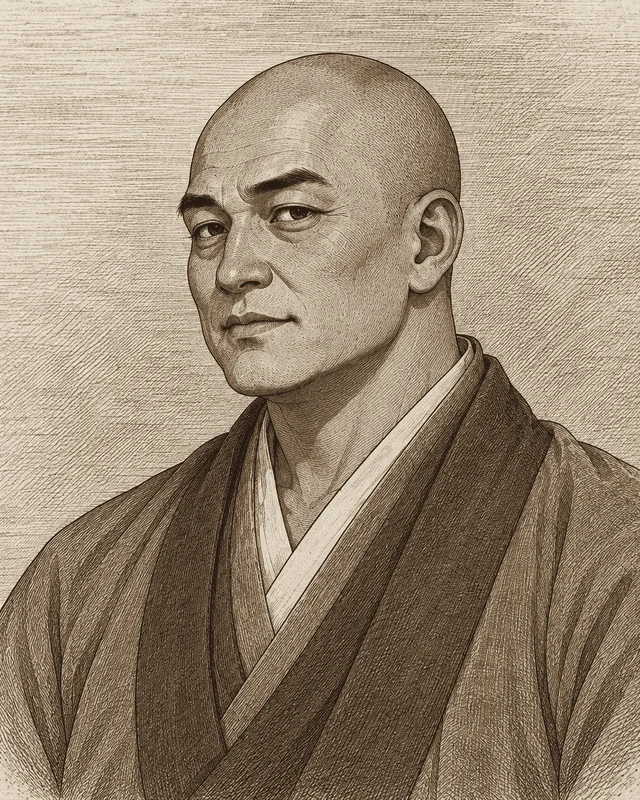
He was born in the 39th year of King Jinpyeong in Bulji village, south of Amnyang commandery (today's Gyeongsan, North Gyeongsang). His family name was Seol, and his childhood name was Seodang. Record
Samguk yusa, vol. 4, Uihae, 'Wonhyo the Unbridled' ("押梁郡南 … 佛地村", "眞平王三十九年 大業十三年丁丑", "俗姓薛氏", "小名誓幢") Wikisource · National Institute of Korean History, Korean History DB Korean History DB · Encyclopedia of Korean Culture, 'Wonhyo' Encykorea
- 650
He set out with Uisang by land to study in Tang China, but in Liaodong was taken for a spy by Goguryeo border guards and held for dozens of days before returning. The Samguk yusa does not give the year of this event; 650 is the date adopted by the Encyclopedia of Korean Culture and others. Record
Samguk yusa, vol. 4, 'Uisang Transmits the Teaching' ("遂與元曉道出遼東 邊戍邏之爲諜者 囚閉者累旬"), Korean History DB of the National Institute of Korean History and its note 228 (the Samguk yusa's 'early Yonghui era' is when Uisang entered China on a Tang envoy's ship) Korean History DB · Uri Yeoksanet, 'Uisang' Urihistory · Encyclopedia of Korean Culture, 'Wonhyo' (first attempt failed in 650)
- 654–661 (reign of King Muyeol)
The Samguk yusa relates that in the reign of King Muyeol, Wonhyo formed a bond with the widowed princess of Yoseok Palace and fathered Seol Chong. It is a story the Samguk yusa took from local tradition (hyangjeon, 鄕傳). Record · Legend
Samguk yusa, 'Wonhyo the Unbridled' ("唯鄉傳所記有一二段異事", "時太宗聞之", "瑤石宮 … 寡公主", "生薛聰") · Encyclopedia of Korean Culture, 'Wonhyo' (met the widowed princess of Yoseok Palace in the reign of King Taejong Muyeol, 654–661)
- 661
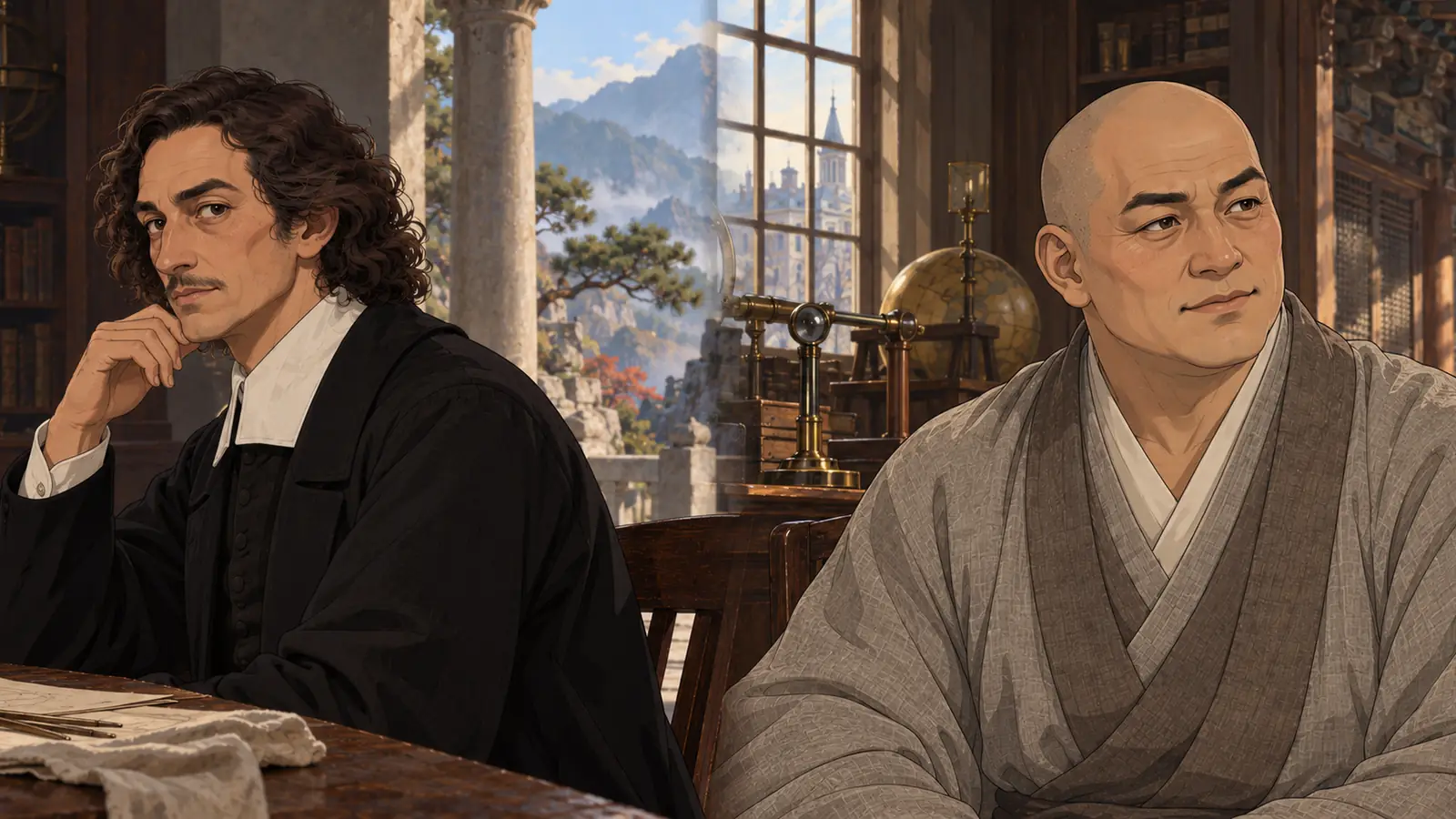
Setting out again with Uisang for Tang China by sea, Wonhyo turned back to Silla, and Uisang went on to Tang alone. The Biographies of Eminent Monks of the Song (988) relates that the two met heavy rain and slept in an earthen hollow by the road, finding in the morning that it was beside an old tomb, and that when they stayed in the tomb the next night, a ghost appeared and tormented them. It records that from this Wonhyo awakened to 'the three realms are mind alone, and all things are consciousness alone'. Record · Legend
Song gaoseng zhuan (988), vol. 4, 'Biography of Uisang of Silla' ("遭其苦雨 遂依道旁土龕間隱身", "明旦相視 乃古墳骸骨旁也", "又寄埏甓之中 夜之未央 俄有鬼物為怪", "三界唯心 萬法唯識", "我不入唐 却携囊返國", "湘乃隻影孤征") shidianguji.com · Uri Yeoksanet, 'Uisang' (second attempt to study abroad, 661) · Samguk yusa, 'Uisang Transmits the Teaching', note 228 of the National Institute of Korean History (the Buseoksa stele, 661)
- Year unknown
After breaking his vows and fathering Seol Chong, he changed into lay clothes and called himself Soseong Geosa. Record
Samguk sagi, vol. 46, biography of Seol Chong ("later he returned to lay life and called himself Soseong Geosa") Korean History DB · Samguk yusa, 'Wonhyo the Unbridled' ("旣失戒生聰 已後易俗服 自號小姓居士")
- Year unknown
He obtained a large gourd used by entertainers, named it 'Muae' (Unhindered) after a phrase in the Avataṃsaka Sūtra, and composed a song. It is said that he carried it through countless villages, singing and dancing. Record · Legend
Samguk yusa, 'Wonhyo the Unbridled' ("偶得優人舞弄大瓠 … 以華嚴經一切無礙人一道出生死 命名曰無礙 仍作歌流于世 … 千村萬落且歌且舞") · Uri Yeoksanet, 'Wonhyo' Urihistory (the Muae song)
- Year unknown
He wrote works such as the Commentary on the Awakening of Faith in the Mahāyāna, the Exposition of the Vajrasamādhi-sūtra and the Ten Approaches to the Reconciliation of Doctrinal Controversy. Sources count his works differently: some 70 titles in a little over 150 fascicles, nearly 90 titles in some 200 fascicles, or over 100 titles in more than 240 fascicles. Debated
Encyclopedia of Korean Culture, 'Wonhyo' (some 70 titles, a little over 150 fascicles) · Uri Yeoksanet, 'Wonhyo's thought' (three representative works, "about 90 titles, some 200 fascicles") Urihistory · Digital Gyeongsan Culture Encyclopedia, 'Wonhyo' (GC08100658) grandculture.net · Korean traditional culture portal (kculture.or.kr) bbIdx=8380
- 686
He died at Hyeolsa (cave temple) on the 30th day of the third month of the second year of Chuigong (by the calendar of the time), aged 70. Record
Stele of Seodang Hwasang at Goseonsa ("died at Hyeolsa on the 30th day of the 3rd month of the 2nd year of Chuigong (686), aged 70"), Korean History DB of the National Institute of Korean History Korean History DB · Encyclopedia of Korean Culture, 'Wonhyo' (died at Hyeolsa (穴寺) on 30 March 686, aged 70) · Samguk yusa, 'Wonhyo the Unbridled' (穴寺)
- 800–808 (reign of King Aejang)
Led by his grandson Seol Jungeop and sponsored by Kim Eonseung, the Stele of Seodang Hwasang at Goseonsa, recording Wonhyo's life, was erected. Record
Korean History DB of the National Institute of Korean History, 'Stele of Seodang Hwasang at Goseonsa' (dated to the reign of King Aejang, 800–808) · Korea Heritage Knowledge Portal, 'Stele for Seodang Hwasang at Goseonsa Temple Site, Gyeongju' portal.nrich.go.kr
- 1101
King Sukjong of Goryeo issued an edict posthumously conferring on Wonhyo the title Daeseong Hwajaeng Guksa and ordering a stele to be erected where he had lived. The proposal of the monk Uicheon prompted this. Record
Goryeosa, vol. 11, Annals of King Sukjong, year 6, 8th month, gyesa day ("追贈元曉大聖和靜國師") Korean History DB · National Institute of Korean History, note to the Samguk yusa (Hwajaeng Guksa stele erected by the edict of the 8th month of 1101, Sukjong year 6) Korean History DB · Encyclopedia of Korean Culture, 'Wonhyo' (Uicheon's proposal to Sukjong)