Great Games of Thought
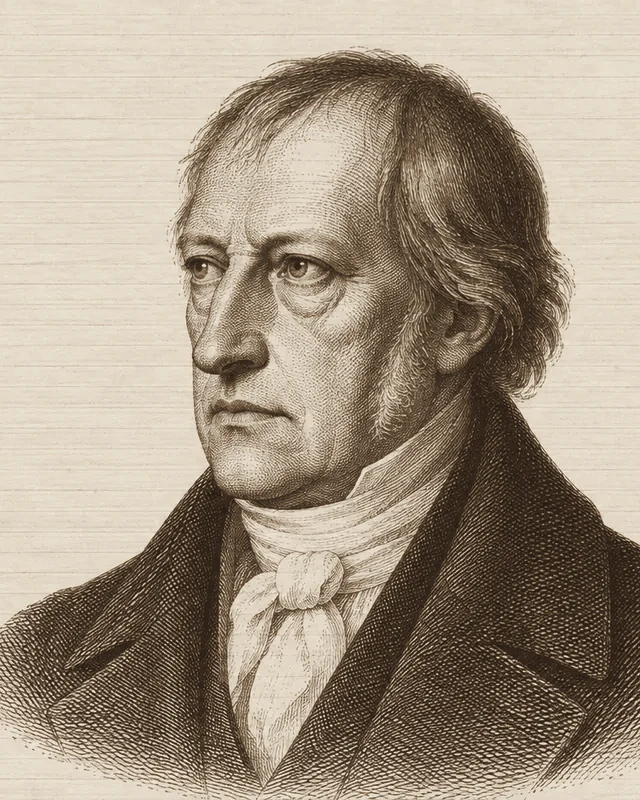
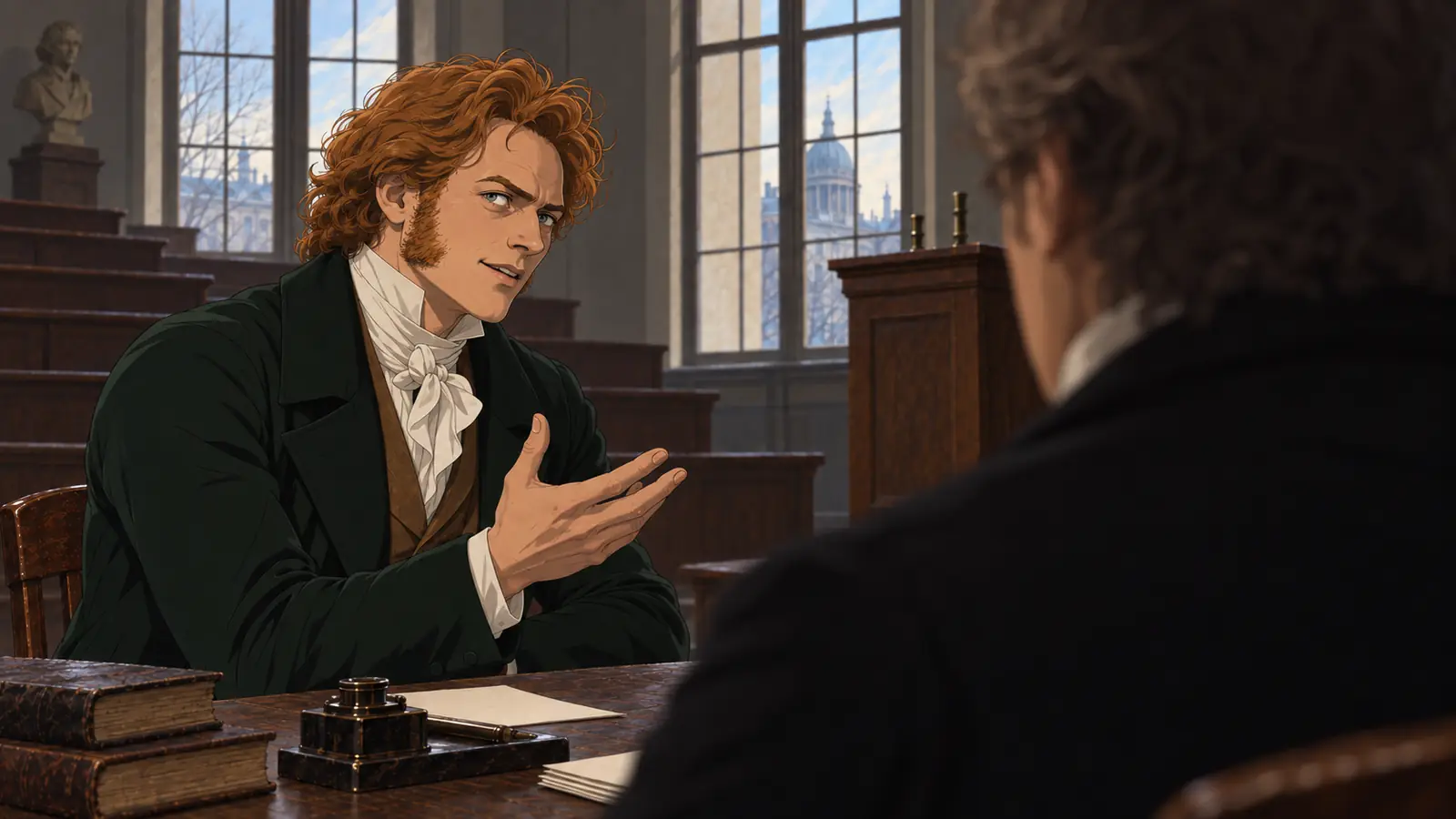
Hegel — an imagined portraitAn imagined portrait

Georg Wilhelm Friedrich Hegel

1770–1831

Hegel, who saw reason

History doesn't go in circles. It moves forward.
Game 1 · Reconstruction; later lectures, 1822–1831

Overview

Georg Wilhelm Friedrich Hegel was a German philosopher born in Stuttgart in 1770. Record

After working as a private tutor, newspaper editor and gymnasium headmaster, he became a full professor at the University of Heidelberg in 1816, at 46, and from 1818 he taught at the University of Berlin. Record

He left books such as the Phenomenology of Spirit (1807), the Science of Logic (1812–1816), the Encyclopedia (1817) and the Elements of the Philosophy of Right (1821). Record

In his Berlin lectures he said that reason governs the world, and that world history is the progress of the consciousness of freedom. Record · Paraphrase

Scholars hold that his ideas left a deep mark on later thinkers such as Marx and Kierkegaard, and opinion on his theory of the state is still divided. Interpretation · SEP (Paul Redding) · NDB (Iring Fetscher)

Timeline

  1. 1770

    He was born in Stuttgart on 27 August. Record

    NDB 8 (1969), 'Hegel, Georg Wilhelm Friedrich' (Iring Fetscher) deutsche-biographie.de · Frankfurter Personenlexikon 'Hegel, Georg Wilhelm Friedrich' (Sabine Hock) frankfurter-personenlexikon.de · hegel.net 'Hegel Biography' hegel.net

  2. 1788

    He entered the Tübingen seminary (Stift), studied philosophy and theology there until 1793, and became friends with Hölderlin and Schelling. Record

    SEP 'Georg Wilhelm Friedrich Hegel' (Paul Redding, revised 2025) SEP · NDB 8 (1969), 'Hegel, Georg Wilhelm Friedrich' (Iring Fetscher) deutsche-biographie.de · IEP 'Hegel: Social and Political Thought' (David A. Duquette) §1 IEP

  3. 1793

    After graduating he worked as a private tutor in Bern, Switzerland (1793–1796) and in Frankfurt (1797–1800). Hölderlin arranged the Frankfurt post for him. Record

    NDB 8 (1969), 'Hegel, Georg Wilhelm Friedrich' (Iring Fetscher) deutsche-biographie.de · IEP 'Hegel: Social and Political Thought' (David A. Duquette) §1 IEP · Frankfurter Personenlexikon 'Hegel, Georg Wilhelm Friedrich' (Sabine Hock) frankfurter-personenlexikon.de

  4. 1801

    He moved to Jena and began teaching at the university as an unsalaried Privatdozent. Record

    IEP 'Hegel: Social and Political Thought' (David A. Duquette) §1 IEP · SEP 'Georg Wilhelm Friedrich Hegel' (Paul Redding, revised 2025) SEP · Frankfurter Personenlexikon 'Hegel, Georg Wilhelm Friedrich' (Sabine Hock) frankfurter-personenlexikon.de

  5. 1805

    In February he became an extraordinary (associate) professor at the University of Jena. Record

    hegel.net 'Hegel Biography' hegel.net · EBSCO Research Starters 'Georg Wilhelm Friedrich Hegel' (William S. Haney) ebsco.com · IEP 'Hegel: Social and Political Thought' (David A. Duquette) §1 IEP

  6. 1806

    On 13 October, the day Napoleon's army entered Jena, he wrote to his friend Niethammer that he had seen 'the Emperor — this world-soul'. At the time he was finishing the manuscript of the Phenomenology of Spirit. Record

    Karl Rosenkranz, G. W. F. Hegel's Leben (1844), pp. 229–230 Internet Archive · Hegel: The Letters (English translation by Butler and Seiler), to Niethammer, 13 October 1806, marxists.org Marxists Internet Archive · SEP 'Georg Wilhelm Friedrich Hegel' (Paul Redding, revised 2025) SEP · NDB 8 (1969), 'Hegel, Georg Wilhelm Friedrich' (Iring Fetscher) deutsche-biographie.de

  7. 1807

    The Phenomenology of Spirit came out. With the university's situation further worsened by the occupation of Jena by Napoleon's army in 1806, and his income no longer enough as student numbers fell, he left Jena in March and worked as a newspaper editor in Bamberg. Record

    SEP 'Georg Wilhelm Friedrich Hegel' (Paul Redding, revised 2025) SEP · IEP 'Hegel: Social and Political Thought' (David A. Duquette) §1 IEP · NDB 8 (1969), 'Hegel, Georg Wilhelm Friedrich' (Iring Fetscher) deutsche-biographie.de · NDB „weil der Rückgang der Studentenzahlen ihm keine ausreichenden Einnahmen mehr ließ“ · Karl Rosenkranz, G. W. F. Hegel's Leben (1844), p. 231

  8. 1808

    In December, through Niethammer's help, he became headmaster of the Aegidien Gymnasium in Nuremberg, serving until 1816. Record

    NDB 8 (1969), 'Hegel, Georg Wilhelm Friedrich' (Iring Fetscher) deutsche-biographie.de · hegel.net 'Hegel Biography' hegel.net · IEP 'Hegel: Social and Political Thought' (David A. Duquette) §1 IEP

  9. 1811

    In September he married Marie von Tucher. Record

    NDB 8 (1969), 'Hegel, Georg Wilhelm Friedrich' (Iring Fetscher) deutsche-biographie.de · hegel.net 'Hegel Biography' hegel.net

  10. 1812

    The first volume of the Science of Logic came out; it was completed in three volumes by 1816. Record

    NDB 8 (1969), 'Hegel, Georg Wilhelm Friedrich' (Iring Fetscher) deutsche-biographie.de · IEP 'Hegel: Social and Political Thought' (David A. Duquette) §1 IEP · SEP 'Georg Wilhelm Friedrich Hegel' (Paul Redding, revised 2025) SEP

  11. 1816

    In the autumn, at 46, he became a full professor at the University of Heidelberg. The following year he published the Encyclopedia of the Philosophical Sciences. Record

    NDB 8 (1969), 'Hegel, Georg Wilhelm Friedrich' (Iring Fetscher) deutsche-biographie.de · SEP 'Georg Wilhelm Friedrich Hegel' (Paul Redding, revised 2025) SEP · IEP 'Hegel: Social and Political Thought' (David A. Duquette) §1 IEP

  12. 1818

    In the autumn he moved to the University of Berlin as professor of philosophy and taught there until his death. Record

    NDB 8 (1969), 'Hegel, Georg Wilhelm Friedrich' (Iring Fetscher) deutsche-biographie.de · SEP 'Georg Wilhelm Friedrich Hegel' (Paul Redding, revised 2025) SEP · IEP 'Hegel: Social and Political Thought' (David A. Duquette) §1 IEP

  13. 1820

    On 25 June he wrote the preface to the Elements of the Philosophy of Right. The book's title page is dated 1821. Record

    Hegel, Grundlinien der Philosophie des Rechts, Vorrede, zeno.org Zeno.org,+Georg+Wilhelm+Friedrich/Grundlinien+der+Philosophie+des+Rechts/Vorrede · Hegel, Philosophy of Right, Preface (English translation by S. W. Dyde, 1896), marxists.org Marxists Internet Archive · SEP 'Georg Wilhelm Friedrich Hegel' (Paul Redding, revised 2025) SEP · NDB 8 (1969), 'Hegel, Georg Wilhelm Friedrich' (Iring Fetscher) deutsche-biographie.de

  14. 1831

    He died in Berlin on 14 November. The doctors diagnosed the cause of death as cholera. Record

    Karl Rosenkranz, G. W. F. Hegel's Leben (1844), passage on Hegel's death Internet Archive · NDB 8 (1969), 'Hegel, Georg Wilhelm Friedrich' (Iring Fetscher) deutsche-biographie.de · IEP 'Hegel: Social and Political Thought' (David A. Duquette) §1 IEP

  15. 1831

    There are other views on the cause of death. His wife Marie wrote in a letter of her surprise at the diagnosis, saying she had seen none of the symptoms of cholera. Debated

    Karl Rosenkranz, G. W. F. Hegel's Leben (1844), passage on Hegel's death Internet Archive · hegel.net, Stephen Cowley, summary and translation of Rosenkranz's Hegels Leben, 24/24 hegel.net · nd-aktuell, Charlotte Szász, 'Der Geist und der Tod' (14 November 2021) nd-aktuell.de
Key ideas

Reason governs the world

He said that the only thought philosophy brings to the study of history is that 'reason governs the world'. As an example, he said that just as the solar system moves according to unchanging laws, those laws are reason in the phenomena. Record · Paraphrase

Lectures on the Philosophy of History, Introduction (lectures 1822–1831, published 1837) §12 · §15 — Hegel, Lectures on the Philosophy of History, Introduction III (Sibree's English translation), marxists.org Marxists Internet Archive · IEP 'Hegel: Social and Political Thought' (David A. Duquette) §1 IEP

World history is the widening of the consciousness of freedom

He said that the East knew only that 'one' is free, Greece and Rome only that 'some' are free, and that the Germanic nations, within Christianity, were the first to know that 'man as man is free'. He saw world history as the progress of this consciousness of freedom. Record · Paraphrase

Lectures on the Philosophy of History, Introduction §21 · §22 — Hegel, Lectures on the Philosophy of History, Introduction III (Sibree's English translation), marxists.org Marxists Internet Archive · IEP 'Hegel: Social and Political Thought' (David A. Duquette) §1 IEP (Philosophy of Right §342) · German text: „Erst die germanischen Nationen sind im Christentum zum Bewußtsein gekommen, daß der Mensch als Mensch frei [ist], die Freiheit des Geistes seine eigenste Natur ausmacht“ (Einleitung — hegel-system.de/de/gesch-1.htm · Gutenberg edition)

The cunning of reason

He said that each person pursues their own interests and passions, but reason sets those passions to work to achieve its own ends. He called this 'the cunning of reason', and the same phrase appears in the Science of Logic (1816). Record · Paraphrase

Lectures on the Philosophy of History, Introduction §26 · §36 — Hegel, Lectures on the Philosophy of History, Introduction III (Sibree's English translation), marxists.org Marxists Internet Archive · Hegel, Science of Logic, 'Teleology' (1816, Subjective Logic), marxists.org Marxists Internet Archive · IEP 'Hegel: Social and Political Thought' (David A. Duquette) §1 IEP

Philosophy understands an age only after it has passed

He said that philosophy recognizes a form of life only once it has grown old. He expressed this in the words 'The owl of Minerva, takes its flight only when the shades of night are gathering' (tr. Dyde). Record · Paraphrase

Elements of the Philosophy of Right, Preface (1820) — Hegel, Grundlinien der Philosophie des Rechts, Vorrede, zeno.org Zeno.org,+Georg+Wilhelm+Friedrich/Grundlinien+der+Philosophie+des+Rechts/Vorrede · Hegel, Philosophy of Right, Preface (English translation by S. W. Dyde, 1896), marxists.org Marxists Internet Archive

In their words

What is rational is real; And what is real is rational.

Was vernünftig ist, das ist wirklich; und was wirklich ist, das ist vernünftig.

Elements of the Philosophy of Right, Preface (Berlin, 25 June 1820) — Hegel, Grundlinien der Philosophie des Rechts, Vorrede, zeno.org Zeno.org,+Georg+Wilhelm+Friedrich/Grundlinien+der+Philosophie+des+Rechts/Vorrede · English translation by S. W. Dyde (1896), Hegel, Philosophy of Right, Preface, marxists.org Marxists Internet Archive Record · Quotation
The owl of Minerva, takes its flight only when the shades of night are gathering.

die Eule der Minerva beginnt erst mit der einbrechenden Dämmerung ihren Flug.

Elements of the Philosophy of Right, Preface (1820) — Hegel, Grundlinien der Philosophie des Rechts, Vorrede, zeno.org Zeno.org,+Georg+Wilhelm+Friedrich/Grundlinien+der+Philosophie+des+Rechts/Vorrede · English translation by S. W. Dyde (1896), Hegel, Philosophy of Right, Preface, marxists.org Marxists Internet Archive Record · Quotation
I saw the Emperor – this world-soul – riding out of the city on reconnaissance.

Den Kaiser — diese Weltseele — sah ich durch die Stadt zum Recognosciren hinausreiten.

Letter to Niethammer, 13 October 1806 — Karl Rosenkranz, G. W. F. Hegel's Leben (1844), pp. 229–230 Internet Archive · Berliner Zeitung, Arno Widmann, 'Werde, der du bist' (27 August 2020) berliner-zeitung.de · English translation by Clark Butler and Christiane Seiler, Hegel: The Letters, to Niethammer, 13 October 1806, marxists.org Marxists Internet Archive Record · Quotation
Nothing great has been accomplished without passion, nor can anything great be accomplished without it.

Es ist nichts Großes ohne Leidenschaft vollbracht worden, noch kann es ohne solche vollbracht werden.

Encyclopedia, Part 3, §474 (1830 edition) — Hegel, Enzyklopädie (1830), Part 3, §474, zeno.org Zeno.org,+Georg+Wilhelm+Friedrich/Enzyklop%C3%A4die+der+philosophischen+Wissenschaften+im+Grundrisse/Dritter+Teil:+Die+Philosophie+des+Geistes/1.+Abteilung:+Der+subjektive+Geist/C.+Psychologie.+Der+Geist/b.+Der+praktische+Geist/bb.+Die+Triebe+und+die+Willk%C3%BCr · the same idea in the lectures: Hegel, Lectures on the Philosophy of History, Introduction III (Sibree's English translation), marxists.org Marxists Internet Archive §26 · translated from the German by Great Games of Thought Record · Quotation

Times and influence

In 1789, while Hegel was at the Tübingen seminary, the French Revolution broke out, and he and his friends welcomed it. With the university's situation further worsened by the occupation of Jena by Napoleon's army in 1806, and his income no longer enough as student numbers fell, he left Jena in 1807 and worked for some years at a newspaper and a school. His philosophy emerged within the current of German idealism that began with Kant and continued through Fichte and Schelling.

After Hegel's death his followers split into left, right and centre, and Marx took up his ideas, turning them in a materialist direction. Scholars hold that Schelling's critique of Hegel led, through Kierkegaard, to existentialism. His theory of the state has been criticized both for defending the state of his day and, as by Popper, for foreshadowing twentieth-century totalitarianism; there are counter-arguments as well, and opinion is still divided.

With people from other games

Common misconceptions

Books to read

Appears in