Great Games of Thought
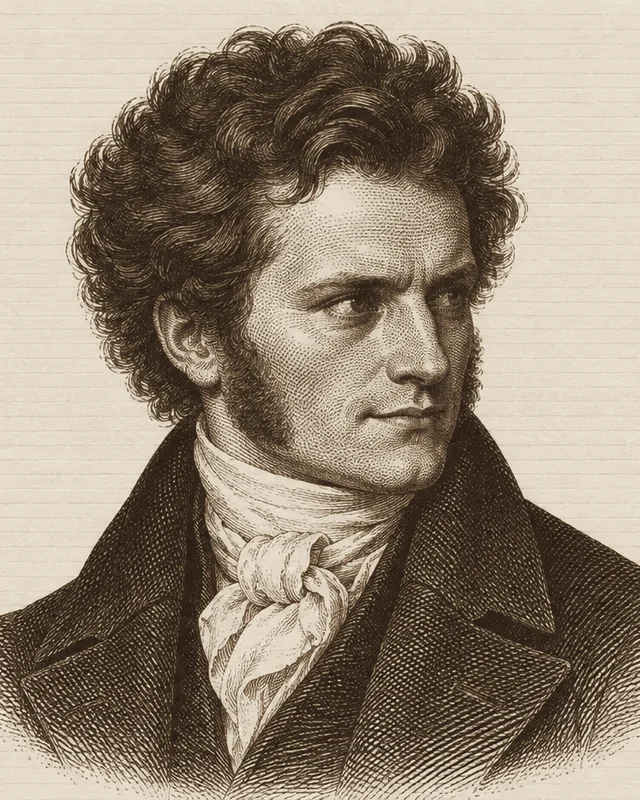
Schopenhauer — an imagined portraitAn imagined portrait

Arthur Schopenhauer

1788–1860

Schopenhauer, who saw the will

Human life swings like a pendulum between the two.
Game 1 · Reconstruction; 1819, Vol. 1

Overview

Arthur Schopenhauer was a German philosopher born in 1788 into a wealthy merchant family in Danzig. Record

His major work, The World as Will and Representation, came out in December 1818, with 1819 printed on the title page. Record

He saw the world we perceive as 'representation', and its inner side as 'will', a blind force that strives without end. Record · Paraphrase

Long overlooked, he began to become known only after publishing Parerga and Paralipomena in 1851. Record

Scholars hold that he influenced artists and thinkers such as Nietzsche, Wagner and Tolstoy, as well as Freud's psychoanalysis. Interpretation · NDB (Lore Hühn) · SEP (Robert Wicks)

Timeline

  1. 1788

    He was born in Danzig on 22 February to the merchant Heinrich Floris Schopenhauer and Johanna. Record

    SEP 'Arthur Schopenhauer' (Robert Wicks, revised 2021) SEP · IEP 'Arthur Schopenhauer' (Mary Troxell) IEP · Schopenhauer-Gesellschaft 'Zeittafel' schopenhauer.de

  2. 1805

    On 20 April, when he was 17, his father died in Hamburg. Record

    SEP 'Arthur Schopenhauer' (Robert Wicks, revised 2021) SEP · Schopenhauer-Gesellschaft 'Zeittafel' schopenhauer.de · IEP 'Arthur Schopenhauer' (Mary Troxell) IEP

  3. 1806

    His mother Johanna moved to Weimar with his sister. There she opened a salon frequented by Goethe and made a name for herself as a writer. Record

    NDB 23 (2007), 'Schopenhauer, Arthur' (Lore Hühn) deutsche-biographie.de · SEP 'Arthur Schopenhauer' (Robert Wicks, revised 2021) SEP · IEP 'Arthur Schopenhauer' (Mary Troxell) IEP

  4. 1809

    He began studying medicine at the University of Göttingen and later switched to philosophy. Record

    NDB 23 (2007), 'Schopenhauer, Arthur' (Lore Hühn) deutsche-biographie.de · SEP 'Arthur Schopenhauer' (Robert Wicks, revised 2021) SEP · Frankfurter Personenlexikon 'Schopenhauer, Arthur' (Inge Kaltwasser) frankfurter-personenlexikon.de
  5. 1813

    In October he received his doctorate in absentia from the University of Jena for his dissertation On the Fourfold Root of the Principle of Sufficient Reason. Record

    NDB 23 (2007), 'Schopenhauer, Arthur' (Lore Hühn) deutsche-biographie.de · Schopenhauer-Gesellschaft 'Zeittafel' schopenhauer.de · SEP 'Arthur Schopenhauer' (Robert Wicks, revised 2021) SEP

  6. 1816

    In sympathy with Goethe's theory of colours, he published On Vision and Colours. Record

    SEP 'Arthur Schopenhauer' (Robert Wicks, revised 2021) SEP · Frankfurter Personenlexikon 'Schopenhauer, Arthur' (Inge Kaltwasser) frankfurter-personenlexikon.de

  7. 1818

    In December The World as Will and Representation, written in Dresden, came out (title page dated 1819). He was 30. Record

    NDB 23 (2007), 'Schopenhauer, Arthur' (Lore Hühn) deutsche-biographie.de · SEP 'Arthur Schopenhauer' (Robert Wicks, revised 2021) SEP · IEP 'Arthur Schopenhauer' (Mary Troxell) IEP

  8. 1820

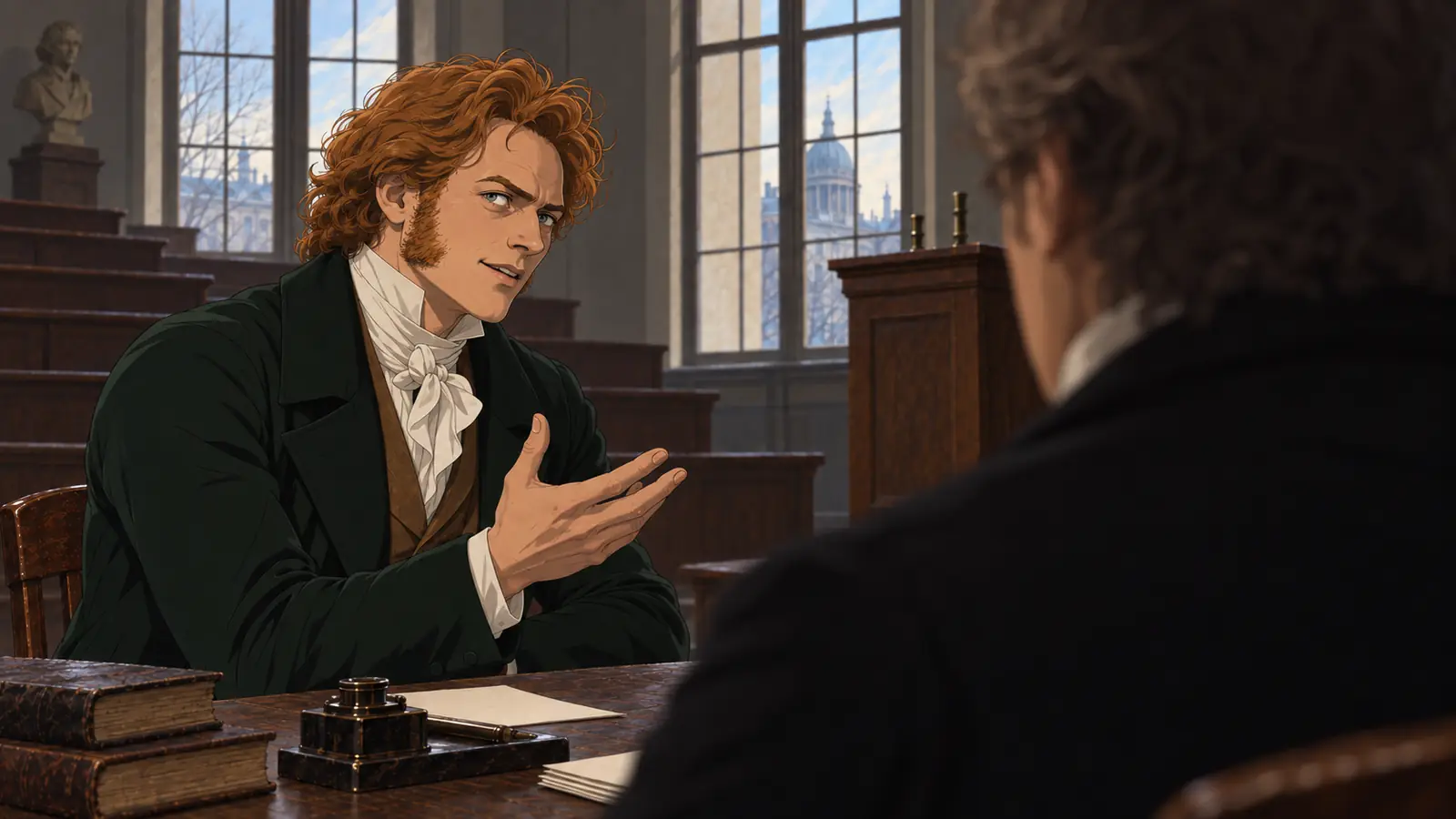
    On 23 March he gave his trial lecture for the qualification to teach at the University of Berlin, with Hegel present. As a Privatdozent he then scheduled his lectures at the same hour as Hegel's. Record

    Schopenhauer-Gesellschaft 'Zeittafel' schopenhauer.de · Deutsche Digitale Bibliothek exhibition 'Arthur Schopenhauer und das Schopenhauer Archiv' (UB Frankfurt), 'Berlin 1820-1831' ausstellungen.deutsche-digitale-bibliothek.de · NDB 23 (2007), 'Schopenhauer, Arthur' (Lore Hühn) deutsche-biographie.de · IEP 'Arthur Schopenhauer' (Mary Troxell) IEP

  9. 1831

    At the end of August, when cholera seemed about to break out in Berlin, he left the city for Frankfurt. Record

    Frankfurter Personenlexikon 'Schopenhauer, Arthur' (Inge Kaltwasser) frankfurter-personenlexikon.de · Schopenhauer-Gesellschaft 'Zeittafel' schopenhauer.de · SEP 'Arthur Schopenhauer' (Robert Wicks, revised 2021) SEP

  10. 1832–1833

    After staying about a year in Mannheim from July 1832, he settled in Frankfurt in 1833 and lived there until his death in 1860. Record

    SEP 'Arthur Schopenhauer' (Robert Wicks, revised 2021) SEP · NDB 23 (2007), 'Schopenhauer, Arthur' (Lore Hühn) deutsche-biographie.de · Frankfurter Personenlexikon 'Schopenhauer, Arthur' (Inge Kaltwasser) frankfurter-personenlexikon.de

  11. 1836

    He published On the Will in Nature, a book seeking to support his ideas with the findings of the natural sciences. Record

    SEP 'Arthur Schopenhauer' (Robert Wicks, revised 2021) SEP · Frankfurter Personenlexikon 'Schopenhauer, Arthur' (Inge Kaltwasser) frankfurter-personenlexikon.de · Schopenhauer-Gesellschaft 'Zeittafel' schopenhauer.de

  12. 1839

    His prize essay On the Freedom of the Human Will won the prize of the Royal Norwegian Society of Sciences. In 1841 he published it together with another essay as The Two Fundamental Problems of Ethics. Record

    NDB 23 (2007), 'Schopenhauer, Arthur' (Lore Hühn) deutsche-biographie.de · SEP 'Arthur Schopenhauer' (Robert Wicks, revised 2021) SEP · Frankfurter Personenlexikon 'Schopenhauer, Arthur' (Inge Kaltwasser) frankfurter-personenlexikon.de

  13. 1844

    With the second edition of The World as Will and Representation, he published a second volume supplementing it. Record

    SEP 'Arthur Schopenhauer' (Robert Wicks, revised 2021) SEP · Frankfurter Personenlexikon 'Schopenhauer, Arthur' (Inge Kaltwasser) frankfurter-personenlexikon.de · Schopenhauer-Gesellschaft 'Zeittafel' schopenhauer.de

  14. 1851

    At 63 he published Parerga and Paralipomena. After John Oxenford's review in an English magazine in 1853, his name became widely known. Record

    NDB 23 (2007), 'Schopenhauer, Arthur' (Lore Hühn) deutsche-biographie.de · SEP 'Arthur Schopenhauer' (Robert Wicks, revised 2021) SEP · IEP 'Arthur Schopenhauer' (Mary Troxell) IEP · Frankfurter Personenlexikon 'Schopenhauer, Arthur' (Inge Kaltwasser) frankfurter-personenlexikon.de

  15. 1860

    He died at his home in Frankfurt on 21 September. Record

    SEP 'Arthur Schopenhauer' (Robert Wicks, revised 2021) SEP · NDB 23 (2007), 'Schopenhauer, Arthur' (Lore Hühn) deutsche-biographie.de · Frankfurter Personenlexikon 'Schopenhauer, Arthur' (Inge Kaltwasser) frankfurter-personenlexikon.de

Key ideas

The world is my representation

He said that the world we know is the way it appears to a subject who perceives and knows — that is, 'representation'. This is the very first sentence of the main text of his major work, Volume 1, §1. Record · Paraphrase

The World as Will and Representation, Vol. 1, §1 (1819) — Schopenhauer, Die Welt als Wille und Vorstellung, zeno.org (Zurich edition) Zeno.org,+Arthur/Die+Welt+als+Wille+und+Vorstellung · Haldane and Kemp's English translation, The World as Will and Idea, Vol. 1, Project Gutenberg #38427 Project Gutenberg · SEP 'Arthur Schopenhauer' (Robert Wicks, revised 2021) SEP

The inner side of the world is 'will'

Just as we feel our own body from within, he held that inside the many phenomena of the world there is also a blind force that strives without end, and he called it 'will'. He wrote that teeth, gullet and intestines are 'objectified hunger'. Record · Paraphrase

The World as Will and Representation, Vol. 1, §§18–19 (knowing the will through the body) · §20 ('objectified hunger') · §27 · §29 (blind impulse, endless striving) — Schopenhauer, Die Welt als Wille und Vorstellung, zeno.org (Zurich edition) Zeno.org,+Arthur/Die+Welt+als+Wille+und+Vorstellung · SEP 'Arthur Schopenhauer' (Robert Wicks, revised 2021) SEP

Will first, intellect second

He held that the intellect learns of the will's decisions only afterwards. He compared their relation to 'a strong blind man carrying on his shoulders a lame man who can see'. Record · Paraphrase

The World as Will and Representation, Vol. 2, Ch. 19 (1844) — Schopenhauer, Die Welt als Wille und Vorstellung, zeno.org (Zurich edition) Zeno.org,+Arthur/Die+Welt+als+Wille+und+Vorstellung · Haldane and Kemp's English translation, The World as Will and Idea, Vol. 3, Project Gutenberg #40097 Project Gutenberg · NDB 23 (2007), 'Schopenhauer, Arthur' (Lore Hühn) deutsche-biographie.de

Life is a pendulum between pain and boredom

He said that when what we want is not fulfilled we suffer, and when it is fulfilled too easily we grow bored. So, he wrote, life swings like a pendulum between pain and boredom. Record · Paraphrase

The World as Will and Representation, Vol. 1, §57 — Schopenhauer, Die Welt als Wille und Vorstellung, zeno.org (Zurich edition) Zeno.org,+Arthur/Die+Welt+als+Wille+und+Vorstellung · SEP 'Arthur Schopenhauer' (Robert Wicks, revised 2021) SEP

The rest that beauty, and above all music, gives

He said that in the moment we are absorbed in something beautiful, we rest for a while from the 'penal servitude' of the will. Unlike the other arts, he held, music is a direct copy of the will itself. Record · Paraphrase

The World as Will and Representation, Vol. 1, §38 · §52 — Schopenhauer, Die Welt als Wille und Vorstellung, zeno.org (Zurich edition) Zeno.org,+Arthur/Die+Welt+als+Wille+und+Vorstellung · SEP 'Arthur Schopenhauer' (Robert Wicks, revised 2021) SEP · SEP 'Schopenhauer's Aesthetics' SEP · 'penal servitude' is Haldane and Kemp's wording (English translation by R. B. Haldane and J. Kemp, The World as Will and Idea, Vol. 1, Project Gutenberg #38427 Project Gutenberg)

In their words

“The world is my idea:”—this is a truth which holds good for everything that lives and knows

»Die Welt ist meine Vorstellung:« – dies ist die Wahrheit, welche in Beziehung auf jedes lebende und erkennende Wesen gilt

The World as Will and Representation, Vol. 1, §1 (1819) — Schopenhauer, Die Welt als Wille und Vorstellung, zeno.org (Zurich edition) Zeno.org,+Arthur/Die+Welt+als+Wille+und+Vorstellung · English translation by R. B. Haldane and J. Kemp, The World as Will and Idea, Vol. 1, Project Gutenberg #38427 Project Gutenberg Record · Quotation
Thus its life swings like a pendulum backwards and forwards between pain and ennui.

Sein Leben schwingt also, gleich einem Pendel, hin und her, zwischen dem Schmerz und der Langenweile

The World as Will and Representation, Vol. 1, §57 (1819) — Schopenhauer, Die Welt als Wille und Vorstellung, zeno.org (Zurich edition) Zeno.org,+Arthur/Die+Welt+als+Wille+und+Vorstellung · English translation by R. B. Haldane and J. Kemp, The World as Will and Idea, Vol. 1, Project Gutenberg #38427 Project Gutenberg Record · Quotation
Music is thus by no means like the other arts, the copy of the Ideas, but the copy of the will itself

Die Musik ist also keineswegs, gleich den andern Künsten, das Abbild der Ideen, sondern Abbild des Willens selbst

The World as Will and Representation, Vol. 1, §52 (1819) — Schopenhauer, Die Welt als Wille und Vorstellung, zeno.org (Zurich edition) Zeno.org,+Arthur/Die+Welt+als+Wille+und+Vorstellung · SEP 'Arthur Schopenhauer' (Robert Wicks, revised 2021) SEP ("a copy of Will itself") · English translation by R. B. Haldane and J. Kemp, The World as Will and Idea, Vol. 1, Project Gutenberg #38427 Project Gutenberg Record · Quotation

Times and influence

In the first half of the nineteenth century, when Schopenhauer was seeking a university post, German academic philosophy was led by idealists such as Fichte, Schelling and Hegel. He began philosophy by studying Plato and Kant at Göttingen, and from around 1813–1814 he read Indian thought and the Upanishads. In Volume 2 of The World as Will and Representation (1844) he wrote that his ideas agree to a great extent with Buddhism.

His name began to become known through Parerga and Paralipomena in 1851 and Oxenford's review in 1853, and scholars hold that this coincided with the waning popularity of Hegel's philosophy. Philosophers and artists such as Nietzsche, Wagner, Tolstoy and Thomas Mann were influenced by him. Scholars hold that his ideas, which put instinctive drives first, also carried over into Freud's psychoanalysis.

With people from other games

Common misconceptions

Books to read

Appears in