Great Games of Thought · Game 1 · · 12 min 22 s
Why You Crave Ramen at Midnight
Schopenhauer×Hegel
Watch on YouTube (12:22) · Audio in Korean · English subtitles
The Two
Schopenhauer and Hegel
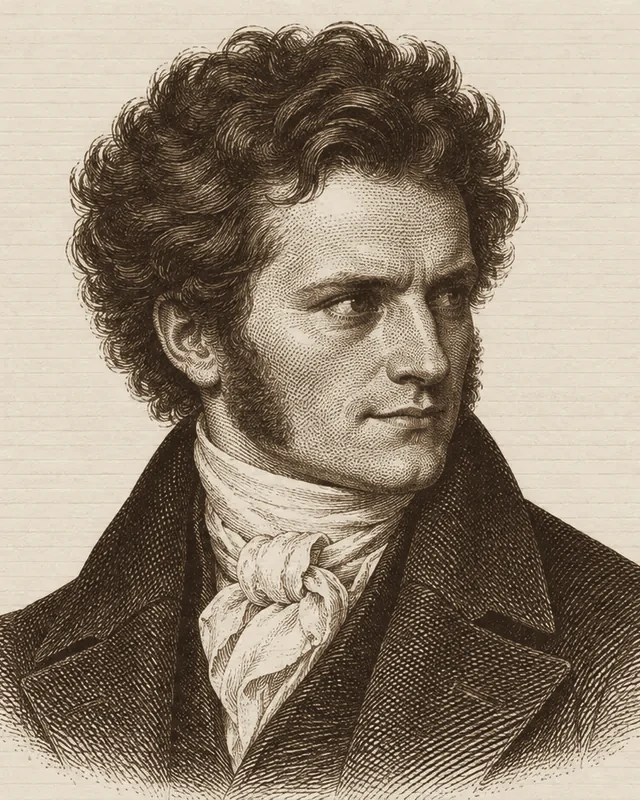 An imagined portrait
Arthur Schopenhauer
Born in 1788Human life swings like a pendulum between the two.Reconstruction; 1819, Vol. 1
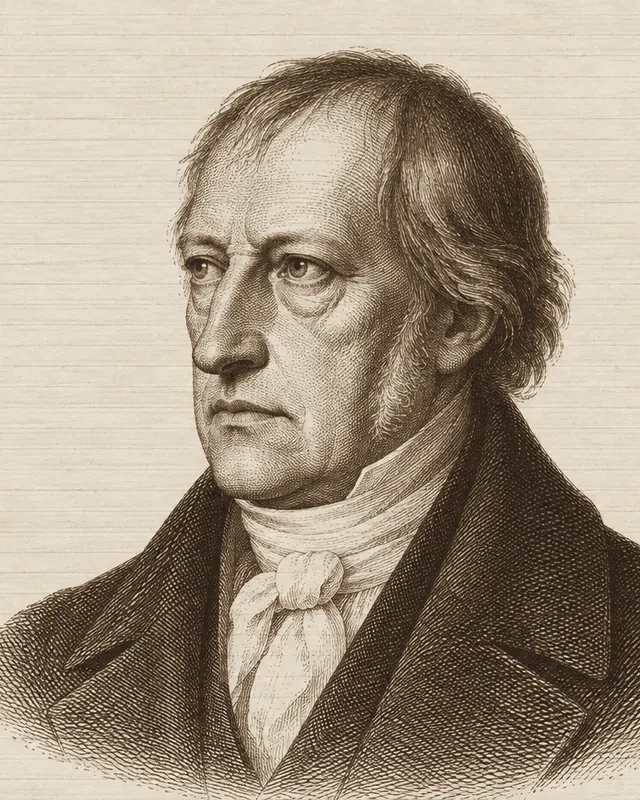 An imagined portrait
History doesn't go in circles. It moves forward.Reconstruction; later lectures, 1822–1831
Twist → Essence
students flocked to Hegel, the university's star philosopher; two hundred years later, we are going back to read the once-unknown Schopenhauer.
My view · The world is written, and you are played.
History · Philosophy · Science
Looking back
History
in Berlin in 1820, students flocked to Hegel, the university's star philosopher; two hundred years later, we are going back to read the once-unknown Schopenhauer.
Philosophy
Hegel saw the world following reason, its inner order; Schopenhauer held that what moves us first is the will.
Science
the brain's signal moves before we feel we've decided. What that means is still debated.
Read
Script and sources
The video's English subtitles, line by line. The dialogue in this video is a dramatization based on what the two men wrote.
Script
91 lines · 11 chapters
[Record] confirmed in documents · [Record · Paraphrase] the original, shortened · [Tradition] a story handed down · [Reconstruction] lines written on the basis of the records · [Interpretation] scholars' interpretation · [Debated] not yet settled
0:00
0:06
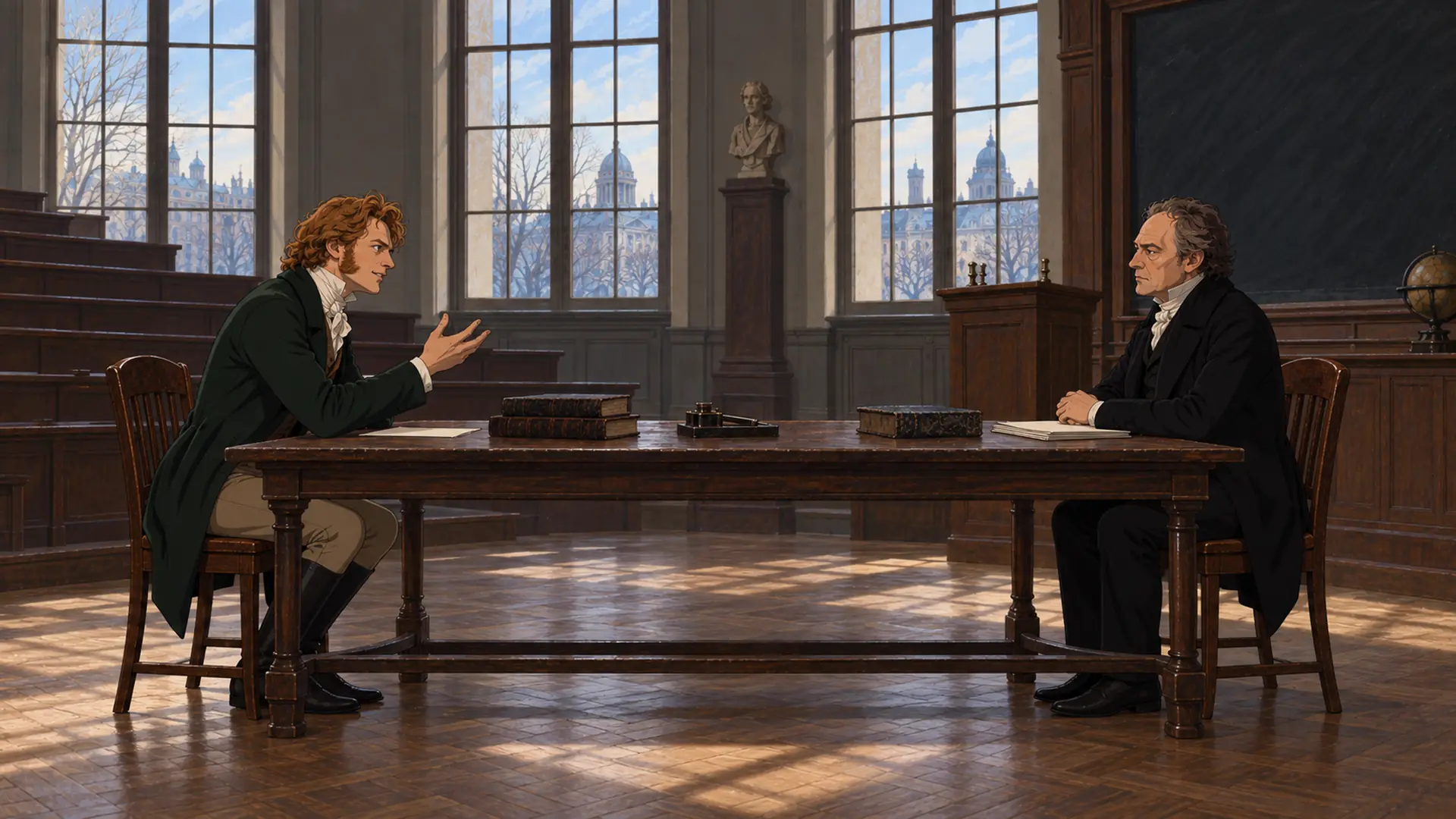
Two hundred years later, in the first half of 2024, the No. 1 bestseller at Kyobo, a major Korean bookstore chain, was a guide to the philosophy of the man in this sparse lecture hall.
Record ; Kyobo first-half sales ranking
At midnight, why do we crave ramen? Two hundred years ago, this man had already written down a clue.
0:45
Hegel was a late bloomer. Tutor, newspaper editor, school headmaster—he became a full professor only at 46.
Record
Jena, 1806. As he finished his first great work, the Phenomenology of Spirit, Napoleon's army entered the city. Hegel wrote to a friend: "I saw the Emperor—this world-soul."
Record, 1806 letter
His lecturing was said to be dreadful: a heavy accent, stammering, coughing, shuffling his notes. Yet his lecture hall was full.
Tradition, students' recollections
But those thoughts were famously hard. A story goes that he once said: "Only one man ever understood me—and even he didn't."
Tradition ; source uncertain
Minerva is the goddess of wisdom; her owl stands for wisdom—for philosophy. Meaning: philosophy understands an age only as it draws to a close.
Record
Scholars see Hegel as the philosopher who read history as one great story: freedom widening from one person, to some, to all.
Interpretation
His ideas later flowed into Marx—and he was also criticized for justifying the Prussian state.
Interpretation, debated
2:14
Arthur Schopenhauer. Born in 1788 into a wealthy merchant family in the port city of Danzig. His father wanted him to become a merchant.
Record
At 17 he lost his father, and his mother Johanna moved to Weimar and became a novelist—hostess of a salon Goethe frequented.
Record
Mother and son did not get along. When she called his first book something only pharmacists would read, he reportedly replied that his would be read long after hers were forgotten.
Tradition
At 30 he published his life's work, The World as Will and Representation. Its first sentence:
Record
He studied light and color with Goethe, called the Upanishads "the consolation of my life," and played the flute every day.
Record
In old age he lived with a poodle named Atma—a word from the Indian scriptures that his biographers render as 'world-soul.'
Record, biography
Hegel saw the world-soul in an emperor on horseback; Schopenhauer gave his poodle a name often rendered as 'world-soul.' From the start, they were that different.
Scholars see Schopenhauer as a leading philosopher who put a blind, endlessly wanting force—not reason—at the center of the world.
Interpretation
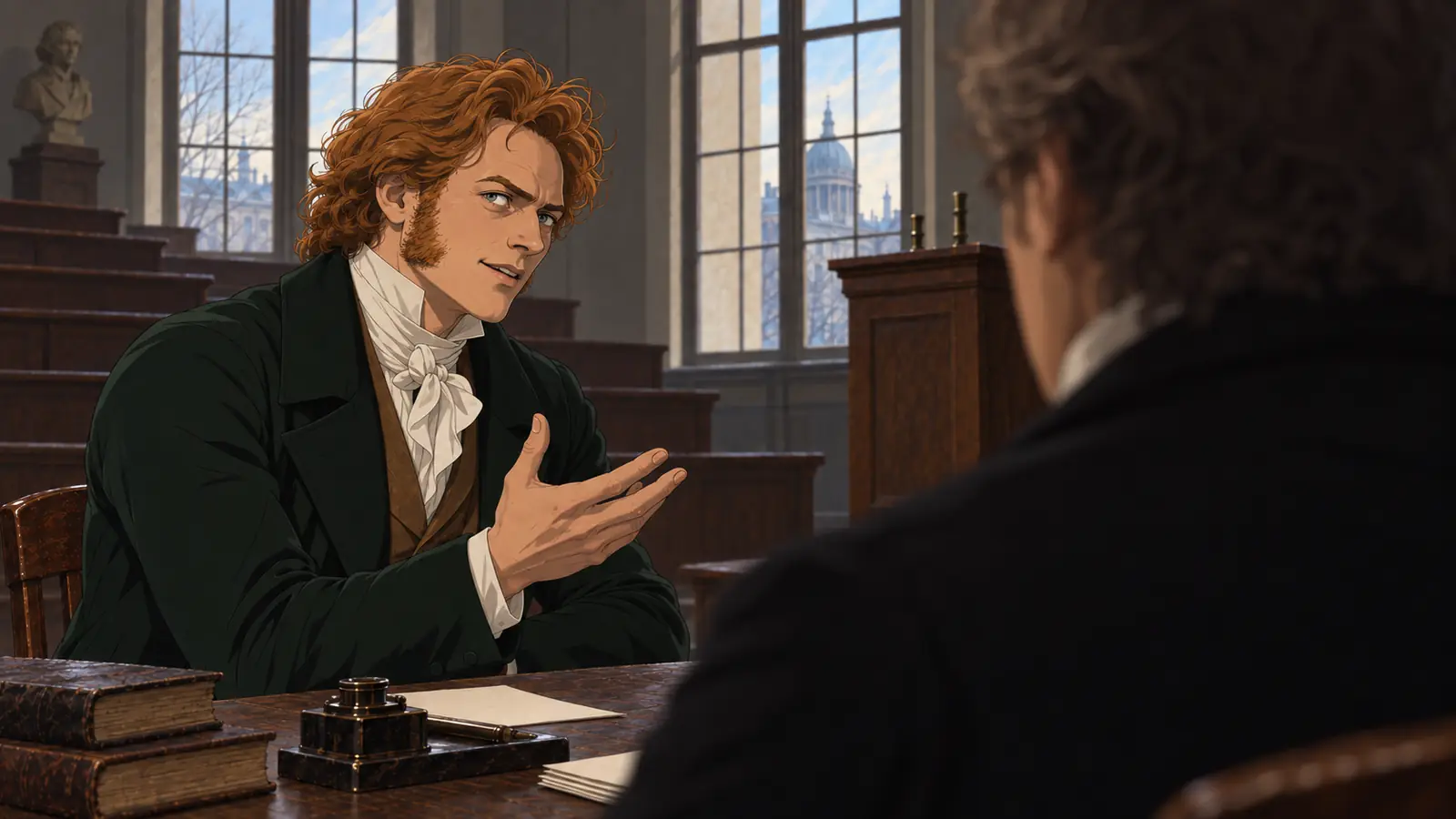
In 1820, these two men lectured at the same university, at the same hour. Let's seat them face to face.
3:56
The red of an apple isn't on the apple. Your eyes and brain paint the reflected light as red. The world we see is a picture on a screen in our heads. That's "representation."
Note · Screen in your head = representation
What moves us behind that screen—the force that makes you open a delivery app at 2 a.m., surging like hunger, the drive to live. That's "will."
Note · The force of wanting = will
And what Hegel believed: just as the planets travel fixed paths, the world and history have an inner order. Hegel called this order of the world 'reason.'
Note · The order of the world = reason
4:38
Their recorded encounters come down to little more than a brief exchange that day.
Record ; trial lecture, 23 March 1820
So what follows is an imagined debate. Only the setting is invented; the lines put the two men's own writings into plain words. Where a line was written later, the year is shown on screen.
We want first, and attach the reasons afterward.
Reconstruction; 1819, Vol. 1 §55 ; later, 1844 Vol. 2 ch. 19
The will is a strong blind man; the intellect rides on his shoulders—sharp-eyed, but unable to walk.
Reconstruction; later, 1844, Vol. 2 metaphor
A quick note: this idea is later put to the test in neuroscience labs. We'll show you later.
Nothing great in the world has been accomplished without passion.
Reconstruction; later lectures, 1822–1831
But reason sets those passions to work for its own ends.
Reconstruction; later lectures, 1822–1831
Hegel called this 'the cunning of reason': each of us chases what we want, yet through those forces history follows reason's course.
Record ; Science of Logic (1816);Lectures on the Philosophy of History
A new phone makes you happy for about a week. And then? You start wondering about the next model.
When we lose ourselves in beauty—above all, when we listen to music. Then we forget both wanting and its pain.
Reconstruction; 1819, Vol. 1 §§38, 52
Music is not a copy of the world. It is the sound of the will itself.
Reconstruction; 1819, Vol. 1 §52
7:09
Those lectures didn't last. Schopenhauer kept announcing courses, but they hardly ever took place.
Record
In 1831, when cholera struck Berlin, Schopenhauer left the city—and Hegel died that year.
Record ; cause of Hegel's death disputed
7:36
There's no right answer. So far, those were the facts and the scholars' readings. From here on, it's my own view.
7:52
I believe the world began as writing. Not just letters on paper—every word, record and piece of information that exists, together forming one sheet of paper called the universe.
The Gospel of John begins: "In the beginning was the Word." And in 1989 the physicist John Wheeler wrote that everything comes from information—"it from bit."
Record
But paper alone makes nothing happen. Even with a score, there's no music until someone plays it.
What arises from that beginning, we call consciousness.
Note · Consciousness = the awake, feeling, knowing mind
In engineering terms, it's a state that exists only while a program runs. The code is written on paper, but execution exists only in the moment.
So consciousness both clearly exists and, in a sense, never was. When the performance ends the music vanishes—but the fact that it was played remains.
Note · In plain words: the music ends, but the fact that it was played remains
Schopenhauer later wrote that his philosophy resonated with Buddhist teaching.
Record ; later, 1844 Vol. 2 ch. 17
And then consciousness looks at itself: "This is what I wanted." The moment it is observed as my will, will is born.
Schopenhauer said the will comes first. I reverse the order. Will is not the root—it is the fruit.
In 1983, neuroscientist Benjamin Libet found that the brain's readiness signal rose 0.3 to 0.5 seconds before people felt they had decided to move. How to interpret this is still debated.
Record ; interpretation debated
In short: writing makes the world; the playing on it makes consciousness; consciousness, seeing itself, becomes will; and will, accelerating through time, becomes causality.
10:38
History: in Berlin in 1820, students flocked to Hegel, the university's star philosopher; two hundred years later, we are going back to read the once-unknown Schopenhauer.
Record
Philosophy: Hegel saw the world following reason, its inner order; Schopenhauer held that what moves us first is the will.
Science: the brain's signal moves before we feel we've decided. What that means is still debated.
Record ; interpretation debated
11:11
Paraphrase of Schopenhauer: "Man can do what he wills, but he cannot will what he wills."
Record ; paraphrase, On the Freedom of the Will(1839)
Science has seen something similar. People who went a night without sleep wanted high-calorie foods more, even though they were no hungrier.
Record ; 2013 experiment
Meanwhile, the brain regions that weigh food choices actually went quieter. The force of wanting grew, and the force of weighing weakened.
Record ; 2013 experiment
I'm not telling you to hold back. Tonight, if you crave ramen, before you eat, just say to yourself once: 'Ah—I'm wanting this right now.'
Sources and research
Sources are listed in their original Korean.
- Record쇼펜하우어, 『의지와 표상으로서의 세계』 1권(1819: 1절, 20절, 38절, 52절, 55절, 57절) · 2권(1844: 17장 불교와 통한다, 19장 의지의 우위·'눈이 보이는 절름발이를 태운 힘센 장님' 비유) · Internet Archive · Internet Archive · Zeno.org
- RecordSchopenhauer, Parerga and Paralipomena (1851: vol. 2, ch. 16, §184 — §185 in some German editions, such as Frauenstädt's — the Upanishads, "the consolation of my life") · On the Will in Nature (1836), introduction — calls Hegel's philosophy "the philosophy of absolute nonsense" · The Two Fundamental Problems of Ethics (1841) and the preface to the second edition of On the Fourfold Root of the Principle of Sufficient Reason (1847) — calls Hegel a "charlatan" (Scharlatan) · Internet Archive · Internet Archive
- Record · Paraphrase쇼펜하우어, 『의지의 자유에 관하여』(1839) — "원하는 것을 할 수는 있지만, 원하는 것을 원할 수는 없다"는 짧은 형태는 아인슈타인(1930~31) 인용으로 널리 퍼졌습니다 · Internet Archive
- Record헤겔, 『정신현상학』(1807) · 『논리학』 2권(1816, '이성의 꾀') · 『법철학 강요』 서문과 341~343절(1820) · 『역사철학 강의』 서론(1822~1831년 강의, 1837년 출간) · 1806년 10월 13일 니트함머에게 보낸 편지 "황제를, 이 세계의 영혼을 보았다" · Marxists Internet Archive
- Tradition헤겔 "나를 이해한 사람은 딱 한 명"(출처 불확실) · 헤겔의 강의 모습(제자들의 회고) · 어머니와의 말다툼 · 같은 시간 헤겔 강의실이 가득 찬 모습
- Record푸들 아트마 — 산스크리트 ātman(나·숨), 프랑크푸르트 인명사전은 '세계의 영혼'으로 옮김 · frankfurter-personenlexikon.de
- Record요한복음 1장 1절 · 존 휠러, "Information, Physics, Quantum"(1989, "It from bit") · DOI
- Record · Interpretation debated벤저민 리벳 외, Brain 106권 3호(1983) · DOI
- RecordGreer, Goldstein & Walker, Nature Communications 4권 2259호(2013) — 하룻밤 수면 박탈 뒤 고칼로리 음식 욕구와 뇌 활동(23명) · DOI
- Record『마흔에 읽는 쇼펜하우어』(강용수), 2024년 상반기 교보문고 종합 1위 · Newsis
If you find a mistake, please tell us in the video's comments. We will check it and correct it. How We Check Facts
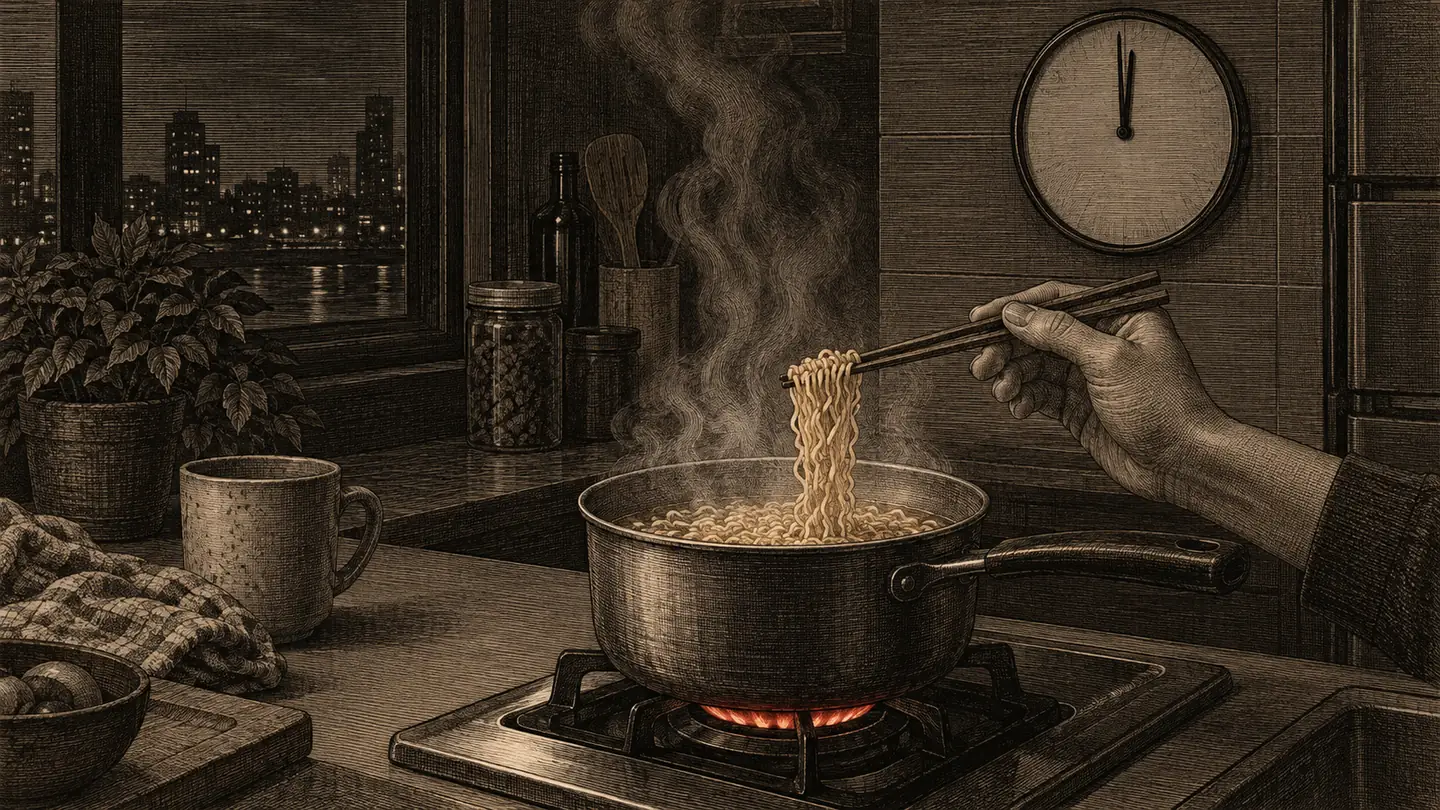
Then, one last question: is your will something you chose?
Share your thoughts in the YouTube commentsKeep watching
Other games
 0213:44
Game 2·Zhuangzi×Turing
If AI Does All My Work, What Should I Do Next?
 0313:46
Game 3·Spinoza×Wonhyo
Why do we always regret it after we snap?
 0413:20
Game 4·Franklin×Keynes
Why Hard Work Alone Doesn't Make You Rich
 0511:12
Game 5·Sejong the Great×Leibniz
Could Writing Speech As It Is Change the World?
 0710:18
Game 7·Eckhart×Naong
What Gets You Through a Hard Day?
 0910:51
Game 9·Van Gogh×Hokusai
Is It Really Too Late?
 1110:18
Game 11·Yi Sun-sin×Aurelius