Great Games of Thought
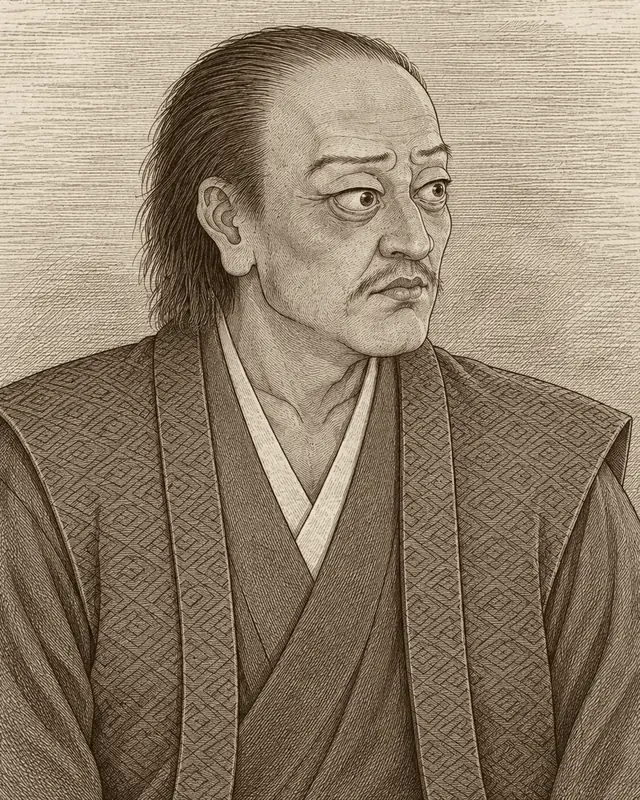
An imagined portrait of Miyamoto Musashi with a receding hairline and hair swept back, wearing a finely patterned sleeveless over-vest and gazing to the side.An imagined portrait

Miyamoto Musashi

died 1645

19th day of the 5th lunar month of Shōhō 2, in Kumamoto, Higo (Kokura monument inscription). His year of birth is not covered by the sources of this dictionary

Musashi, who said to swing the sword quietly

The Way of the sword does not lie in swinging it fast. Quietly, at the pace it swings best.
Game 10 · Reconstruction · Record; paraphrase; Ground Book; Water Book

Overview

Miyamoto Musashi was a Japanese swordsman who died in 1645. Around the age of sixty he began writing The Book of Five Rings, setting down his art of fighting. Record

By his own account, from the age of thirteen until he was twenty-eight or twenty-nine he fought more than sixty times and never lost. Yet looking back after he turned thirty, he wrote that he had not won because he had mastered the art of fighting. Record · his own account

After that, he wrote, by training morning and evening he reached the Way of the art of fighting of its own accord around the age of fifty. Record · Paraphrase

In The Book of Five Rings he taught that the Way of the sword does not lie in swinging it fast, but in swinging it quietly, at the pace it swings best. He said not to draw the mind too tight nor let it slacken, but to set it in the middle and let it sway quietly. Record · Paraphrase

He also left paintings. Shrike on a Withered Branch, an ink painting of a shrike at the tip of a dry branch, is an Important Cultural Property of Japan. Record

Timeline

  1. In his youth

    In the preface to The Book of Five Rings he wrote that, from his first match at thirteen until he was twenty-eight or twenty-nine, he fought more than sixty times and never once lost. Record · his own account

    The Book of Five Rings (五輪書), preface: 「六十餘度迄勝負をすといへども、一度も其利をうしなはず」 — transcription by the Gorin-no-sho study group musasi.siritai.net · manuscripts compared musasi.siritai.net

  2. Year unknown

    The Kokura monument, set up later by his adopted son, records that he fought an opponent named Ganryū and killed him with a single blow of a wooden sword. The same inscription says that people renamed the island Ganryūjima. Record

    Kokura monument inscription (1654): 「武藏、木刄の一撃を以て之を殺す」 「俗、舟嶋を改めて岩流嶋と謂ふ」 — transcription by the Gorin-no-sho study group musasi.siritai.net

  3. After thirty

    He wrote that when he looked back on the past after turning thirty, he had not won because he had mastered the art of fighting. Record · Paraphrase

    The Book of Five Rings (五輪書), preface: 「兵法至極してかつにハあらず」 — musasi.siritai.net

  4. Around fifty

    He wrote that, training morning and evening after that, he reached the Way of the art of fighting of its own accord around the age of fifty, and that from then on he passed the years with no further way to search into. Record · Paraphrase

    The Book of Five Rings (五輪書), preface: 「朝鍛夕錬して見れバ、をのづから兵法の道に逢事、我五十歳の比也。それより以來は、尋入べき道なくして光陰を送る」 — musasi.siritai.net

  5. 1643

    In the first days of the 10th lunar month of Kan'ei 20, he climbed Mount Iwato in Higo, in Kyushu, prayed, and then began writing The Book of Five Rings. In the preface he gave his age as sixty, and said he took up the brush on the night of the 10th day of the 10th month. Record

    The Book of Five Rings (五輪書), preface: 「寛永二十年十月上旬の比、九州肥後の地岩戸山に上り」 「年つもりて六十」 「十月十日の夜、寅の一天に筆をとつて、書始る」 — musasi.siritai.net

  6. 1645

    The Hosokawa-family manuscript of The Book of Five Rings closes each book with a colophon. At the end of the Water Book are the date of the 12th day of the 5th month of Shōhō 2, the signature 「新免武蔵」 and the recipient 「寺尾孫丞殿」. No original in Musashi's own hand survives; the book has come down in manuscripts like this one. Record

    Hosokawa-family manuscript (細川家本), end of the Water Book: 「正保二年五月十二日 新免武蔵 寺尾孫丞殿」 — manuscript transcriptions by the Gorin-no-sho study group musasi.siritai.net (the same colophon at the end of the Ground Book: musasi.siritai.net)

  7. 1645

    He died in Kumamoto, Higo, on the 19th day of the 5th lunar month of Shōhō 2. Record

    Kokura monument inscription (1654): 「正保二乙酉暦五月十九日、肥後國熊本に卒す」 — musasi.siritai.net

  8. 1654

    His adopted son, Miyamoto Iori, set up a monument in Kokura. Its inscription records his fights and his death. Record

    Kokura monument inscription: 「時に、承應三甲午年四月十九日、孝子、敬して焉を建つ」 — musasi.siritai.net

  9. 1776

    Toyoda Kagehide (豊田景英) compiles the biography Niten ki (二天記). A surviving manuscript carries his date at the end of the book: An'ei hinoe-saru, that is, 1776. Most of the well-known details of the Ganryūjima duel come from later biographies such as this one. Record · the duel details are tradition

    Niten ki (二天記), manuscript copied in Kyōwa 1 (1801) — bibliographic record in NDL Search (National Diet Library): 「巻末: 安永丙申仲冬日 豊田景英子俊書」 「豊田景英校」 (安永丙申 = 1776) ndlsearch.ndl.go.jp

  10. 1935

    On 30 April his ink painting Shrike on a Withered Branch is designated an Important Cultural Property of Japan. It is owned by Izumi City and kept at the Kubosō Memorial Museum of Arts, Izumi. Record

    Agency for Cultural Affairs, database of nationally designated cultural properties: 「紙本墨画枯木鳴鵙図〈宮本武蔵筆/〉」 kunishitei.bunka.go.jp
Key ideas

The power of the Way

His school trains the swordsman to swing even the long sword with one hand. He said the sword is heavy and hard to swing at first, but once you have swung it until it is familiar, you gain the power of the Way and it swings well. Right after this he wrote that the Way of the sword does not lie in swinging it fast. Record · Paraphrase

The Book of Five Rings (五輪書), Ground Book, the article 「此一流二刀と名付る事」: 「太刀重くて振廻しがたき物なれども … 太刀も振つけぬれバ、道の力を得て振よくなる也」 「太刀の道と云事、はやく振にあらず」 — musasi.siritai.net

A mind that swings quietly

In the article on the Way of the sword in the Water Book, he said the sword is a matter of swinging it quietly, at the pace it swings best. The same article also says that to stretch the elbow wide and swing strongly is the Way of the sword, so he was not telling people never to use strength. Record · Paraphrase

The Book of Five Rings (五輪書), Water Book, the article 「太刀の道」: 「太刀ハ、振よきほどに、静に振心也」 「いかにも大にひぢをのべて、強く振る事、是太刀の道也」 — musasi.siritai.net

A mind that sways quietly

On the frame of mind in combat, he wrote not to draw the mind too tight nor let it slacken even a little, but to set it in the middle and let it sway quietly, without the swaying stopping for even an instant. At the end of the same article there is also the phrase "a mind without movement" (うごきなき心). Some scholars read this passage as "an unhurried swaying". Record · another reading exists

The Book of Five Rings (五輪書), Water Book, 「兵法心持」: 「きつくひつぱらず、すこしもたるまず」 「心をまん中に置て、心を静にゆるがせて、其ゆるぎのせつなも、ゆるぎやまぬやうに」 — musasi.siritai.net · another reading 「ゆったりとしたゆらぎ」 (Gorin-no-sho study group)

The way of many arts, without a teacher

He wrote that, following the principles of the art of fighting and making them the way of many arts, he had no teacher in anything. The passage is usually read as saying that the Way he reached through the sword became a new path into painting and writing, but the Gorin-no-sho study group reads the "arts" here (諸藝諸能) as the martial arts only. Record · another reading exists

The Book of Five Rings (五輪書), preface: 「兵法の利に任て、諸藝諸能の道となせバ、万事におゐて、われに師匠なし」 — musasi.siritai.net · another reading: Gorin-no-sho study group

In their words

When I trained morning and evening, I came of its own accord upon the Way of the art of fighting; I was around fifty.

朝鍛夕錬して見れバ、をのづから兵法の道に逢事、我五十歳の比也。

The Book of Five Rings (五輪書), preface — transcription by the Gorin-no-sho study group musasi.siritai.net (the Hosokawa and Kusunoki manuscripts read 「朝鍛夕練」) · translated from the Japanese by Great Games of Thought Record · Quotation
What is called the Way of the sword is not swinging it fast.

太刀の道と云事、はやく振にあらず

The Book of Five Rings (五輪書), Ground Book, the article 「此一流二刀と名付る事」 — musasi.siritai.net · translated from the Japanese by Great Games of Thought Record · Quotation
The sword is a matter of swinging it quietly, at the pace it swings best.

太刀ハ、振よきほどに、静に振心也

The Book of Five Rings (五輪書), Water Book, the article 「太刀の道」 — transcription by the Gorin-no-sho study group musasi.siritai.net · Hosokawa manuscript 「太刀はふりよき程に、静にふる心也」 musasi.siritai.net · translated from the Japanese by Great Games of Thought Record · Quotation
Set the mind in the middle, let the mind sway quietly, so that the swaying does not stop for even an instant.

心をまん中に置て、心を静にゆるがせて、其ゆるぎのせつなも、ゆるぎやまぬやうに

The Book of Five Rings (五輪書), Water Book, 「兵法心持」 — musasi.siritai.net · manuscripts compared musasi.siritai.net · translated from the Japanese by Great Games of Thought Record · Quotation

Times and influence

Musashi began writing The Book of Five Rings around the age of sixty in Higo, in Kyushu (today's Kumamoto). No original in his own hand survives, so the book is read by comparing manuscripts such as the Hosokawa, Kusunoki and Yoshida family copies. The kana spelling differs a little from copy to copy, but the meaning is almost the same.

Nine years after his death, his adopted son Miyamoto Iori set up a monument in Kokura recording his fights and his death. The widely told details of the Ganryūjima duel, such as the story that he arrived later than the appointed time, come from later biographies such as Niten ki (1776). His ink painting Shrike on a Withered Branch was designated an Important Cultural Property of Japan in 1935.

With people from other games

Common misconceptions

Books to read

Appears in