Great Games of Thought · Game 10 · · 12 min 23 s
Why Do Skilled People Ease Off?
Musashi×Kim Jeong-hui
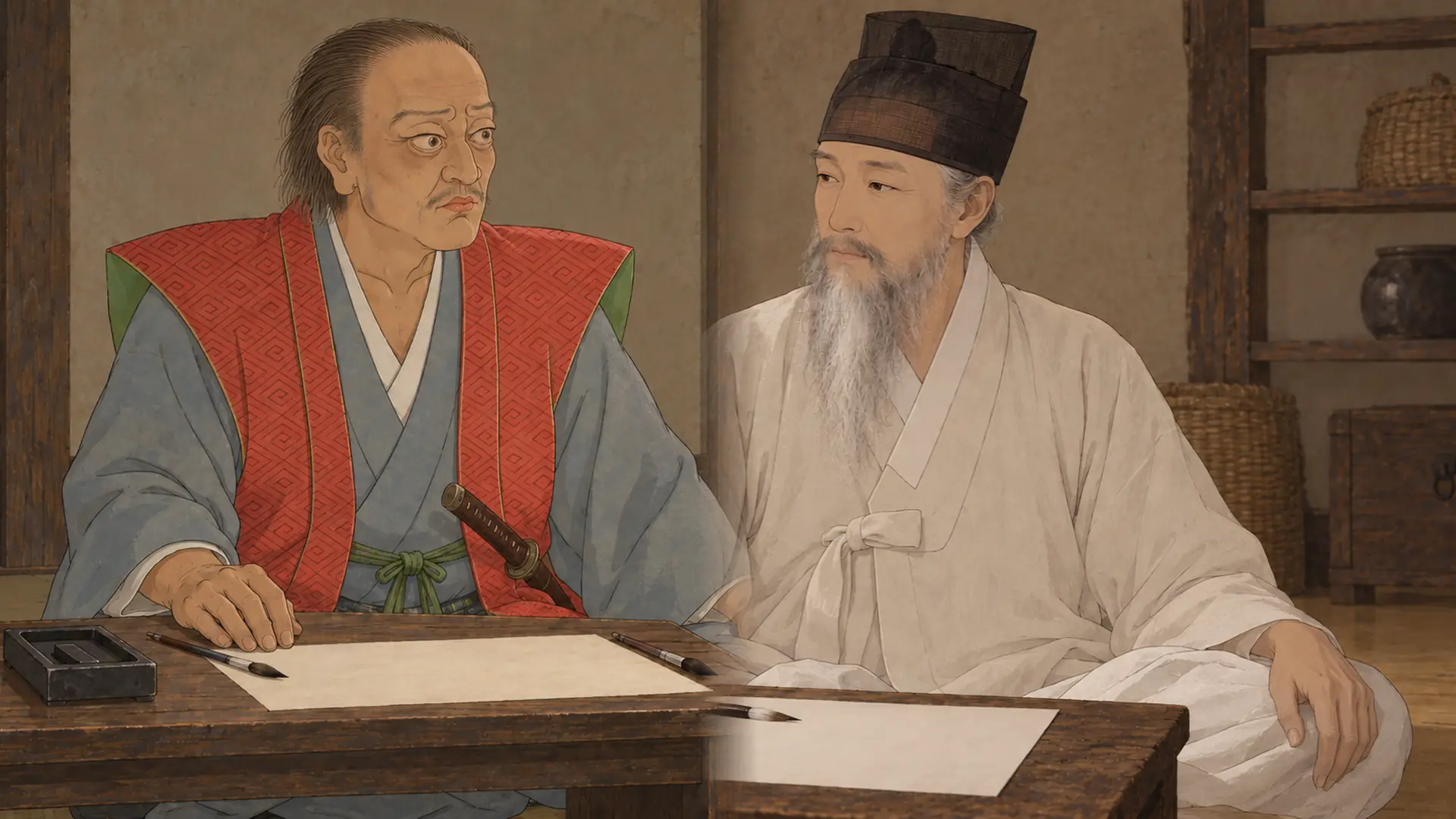
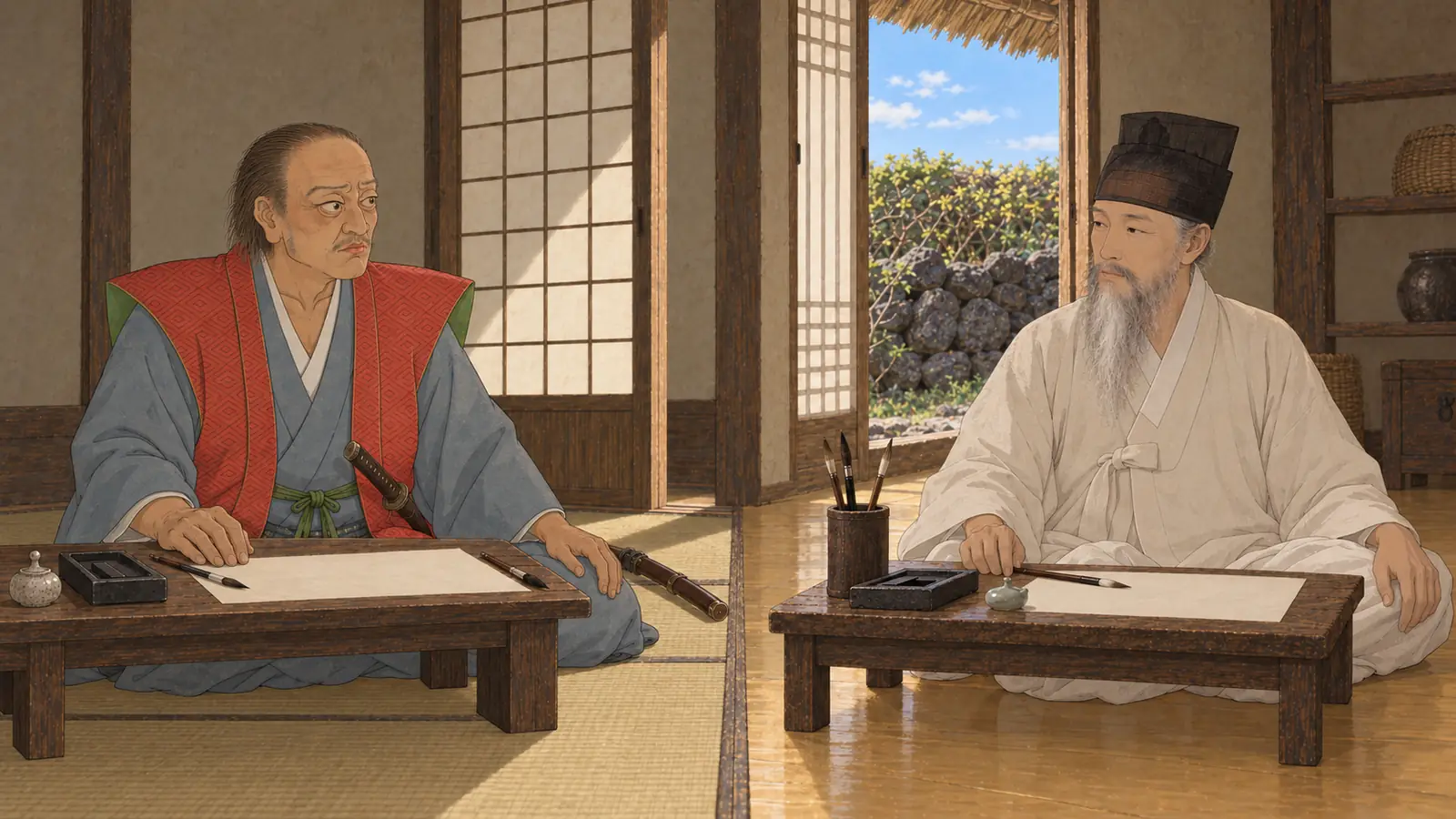
Why do skilled people ease off? We look for the answer in Miyamoto Musashi, the Japanese swordsman who wrote that the sword should be swung quietly, as easily as it swings, and Kim Jeong-hui (Chusa), the Joseon scholar who wrote that he had worn holes in his inkstones and worn down a thousand brushes. One wrote that he reached the Way of the art of fighting around the age of fifty; the other wrote that in painting orchids the last one part in ten thousand is the hardest to achieve. One says he arrived; the other says it stays hard to the end. Yet neither of them stopped making the effort. Only how they made it changed. The answer appears first, some two thousand years earlier, at the knife-tip of Cook Ding in the Zhuangzi. As the last episode of season 1, it closes by looking back on all ten games and on the old story of dotting the dragon's eyes. The two never met; Kim Jeong-hui was born about 140 years after Musashi died. The dialogue is a dramatization reconstructed from what they wrote.
Watch on YouTube (12:23) · Audio in Korean
The Two
Musashi and Kim Jeong-hui
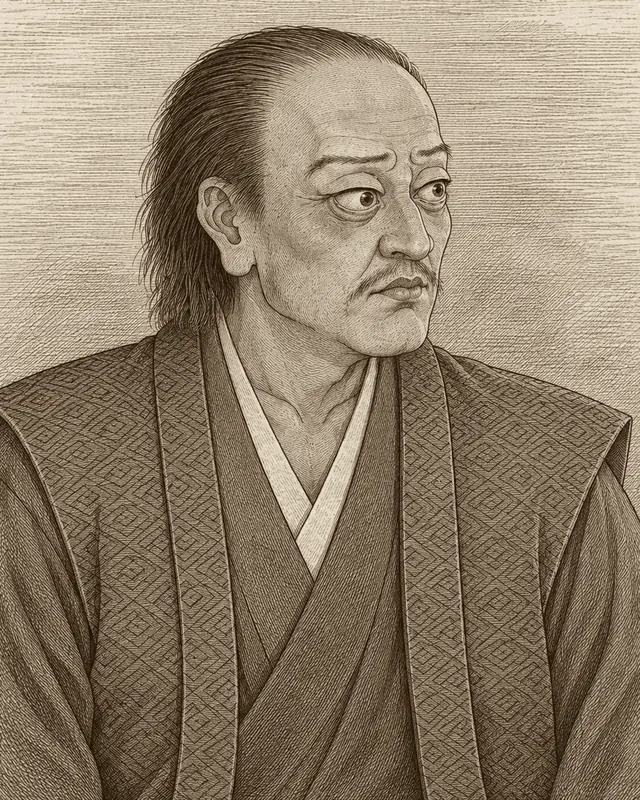 An imagined portrait
Miyamoto Musashi, the Japanese swordsman who wrote that the sword should be swung quietly, as easily as it swings
The Way of the sword does not lie in swinging it fast. Quietly, at the pace it swings best.Reconstruction · Record; paraphrase; Ground Book; Water Book
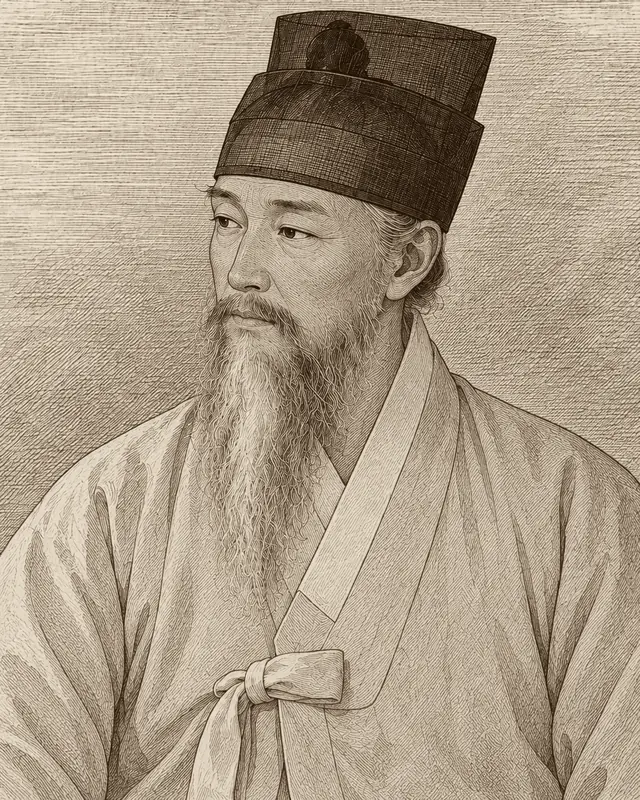 An imagined portrait
Kim Jeong-hui (Chusa), the Joseon scholar who wrote that he had worn holes in his inkstones and worn down a thousand brushes
You cannot become a Buddha on the spot, nor catch a dragon with your bare hands. It comes only after painting a lot.Reconstruction · Record; paraphrase; 題石坡蘭卷
Twist → Essence
Yet neither of them stopped making the effort.
Only how they made it changed.
Read
Script and sources
The video's English subtitles, line by line. What follows is an imagined dialogue built from the two men's writings. They lived about 140 years apart and never met.
Script
102 lines · 9 chapters
[Record] confirmed in documents · [Paraphrase] the original, shortened · [Parable] a story from an old book · [His own account] what he wrote about himself · [Tradition] · [A story handed down] a story handed down · [Observation] pointed out by looking at the picture itself · [Interpretation] scholars' or the host's interpretation · [Another reading] read differently by different scholars · [Debated] not yet settled · [A suggestion] the host's suggestion · [Callback] words from an earlier game called back In the video, ③ My view is shown in Korean at the top left of the screen; the English subtitles mark only "My view". The small text at the bottom right gives the kind of image (actual artwork, actual portrait, as it looks today, later imagined picture, imagined scene and so on); the English subtitles show it in brackets. The bars in the practice-study picture have no figures on their heights (the red share of the circle is about 26%), and the golf and football experiment scenes are redrawn as pictures.
0:00
On your first day behind the wheel, you gripped it so hard your palms were sweating, didn't you?
Do not draw the mind too tight, nor let it slacken even a little.
Reconstruction · Record; paraphrase; The Book of Five Rings, Water Book
Chusa Kim Jeong-hui of Joseon Korea, said to have worn down a thousand brushes, also left an answer.
Interpretation — shown in the chapter at 3:19 (Chusa Kim Jeong-hui)
But that answer appears first at the knife tip of a cook from about 2,000 years before either of them.
Interpretation; Zhuangzi, 4th–3rd century BC
0:42
A story left by the ancient Chinese thinker Zhuangzi. To this day, superb skill is called 'Cook Ding carving the ox.' Before the king, the cook Ding carves up an ox.
Record; parable; Zhuangzi, 'Nourishing Life'
At first, all I could see was the ox. After three years, I no longer saw the whole ox.
Reconstruction · Record; paraphrase; Zhuangzi, 'Nourishing Life'
Now I do not look with my eyes; I meet it with my spirit. I only follow the grain Heaven made.
Reconstruction · Record; paraphrase; Zhuangzi, 'Nourishing Life'
If it ended here, it would be a story about just loosening up. But there is a sentence right after it.
Even so, when I come to a place where the joints are tangled, I see how hard it is, and I am afraid, and careful.
Reconstruction
My gaze stops, and my hand slows.
Reconstruction · Record; paraphrase; Zhuangzi, 'Nourishing Life'
I move the knife ever so slightly, and softly, it falls apart like crumbling earth.
Reconstruction · Record; paraphrase; Zhuangzi, 'Nourishing Life'
It's not that he took the strength out; how he used his strength changed. I see this as passing through while embracing the fear.
Interpretation — this channel's reading
Hearing this, the king said a story about carving an ox had taught him 'how to nourish life.'
Record; paraphrase; Zhuangzi, 'Nourishing Life'
Musashi wrote that he 'reached the Way,' and Kim Jeong-hui wrote that the last part is the hardest. This one cook holds both of those minds.
Record; paraphrase; The Book of Five Rings; 題石坡蘭卷
1:46
Mount Iwato, in Kyushu, Japan. In his final years, Musashi climbs this mountain, prays, and begins to write a book.
Record; The Book of Five Rings, preface; the cave is tradition
Look here. This is a painting by the swordsman.
Record; 枯木鳴鵙図 (Shrike on a Withered Branch); Important Cultural Property
In his youth, he wrote himself, he fought more than 60 bouts and won them all.
Record; his own account; The Book of Five Rings, preface
Some of those fights were to the death. The monument raised by his adopted son records that he struck his opponent dead with a wooden sword.
Record; the Kokura monument inscription; details are tradition
Looking back after I passed 30, I had not won because I had mastered the art of fighting.
Reconstruction · Record; paraphrase; The Book of Five Rings, preface
From then on I trained morning and evening, and at around 50, I naturally reached the Way of the art of fighting.
Reconstruction · Record; paraphrase; The Book of Five Rings, preface
His two-sword school trains you to swing even the long sword with one hand.
Record; The Book of Five Rings, Ground Book
But once you have swung it until it is familiar, you gain the power of the Way, and it swings well.
Reconstruction · Record; paraphrase; The Book of Five Rings, Ground Book
The Way of the sword does not lie in swinging it fast. Quietly, at the pace it swings best.
Reconstruction · Record; paraphrase; Ground Book; Water Book
It is the same thing Cook Ding said. When something new feels heavy and clumsy at first, it doesn't mean you're on the wrong track. In Chinese characters, this 'Way' is written 道, Dao.
Interpretation; the 道 of '道の力'
Then what about the mind? Right after the line we saw at the start, 'neither too tight nor slack,' he writes this:
Record; The Book of Five Rings, Water Book
So that the swaying never stops, even for an instant.
Reconstruction · Record; paraphrase; The Book of Five Rings, Water Book
It isn't simply 'do not sway.' I read this as the strength to embrace the swaying and come back.
Another reading; an unhurried swaying (Gorin-no-sho study group)
3:19
About 140 years after Musashi died, a man is born across the sea, in Joseon. The man who wrote that the last part is the hardest.
Record; Musashi 1645; Kim Jeong-hui 1786
Chusa Kim Jeong-hui. A Joseon scholar who left a calligraphy all his own: the Chusa style. The Veritable Records, the state chronicle, say he awakened to the true realm in many scripts.
Record; paraphrase; Veritable Records of King Cheoljong, obituary
He is sent into exile on Jeju. On that island, he is believed to have painted this, now a National Treasure.
Record; Veritable Records of King Heonjong; 1844 is a scholarly dating
At the end of the painting, he added a text. It was for a disciple who had not forgotten him in exile, and who found books far away and sent them.
Record; paraphrase; Sehando, inscription
Only when the year turns cold do we know that the pine and the cypress are the last to wither.
Record; Analects, Zihan; quoted in the inscription
What sways in the winter wind is the branches; the pine stays standing where it is. The mind may sway, but the place where it stands does not change.
Interpretation
He divided the skill of painting into 10,000 parts, and called one part a 分.
Interpretation; 分 = one part in 10,000
That one remaining part is the hardest of all to bring to completion.
Reconstruction · Record; paraphrase; 題石坡蘭卷
You cannot become a Buddha on the spot, nor catch a dragon with your bare hands. It comes only after painting a lot.
Reconstruction · Record; paraphrase; 題石坡蘭卷
Your spirit must gather, and your circumstances fit.
Reconstruction · Record; paraphrase; 與佑兒 (to his son)
He who said to paint a lot now says not to go past three or four sheets at a time. Don't just fill the sheet count with your spirit scattered.
Interpretation
And yet, it does not come from outside human strength either.
Reconstruction · Record; paraphrase; 題石坡蘭卷
He also left sharp words on the calligraphy theory of an earlier-generation calligrapher.
Record; Collected Works of Wandang, 書圓嶠筆訣後
Yet this man, so harsh about other people's calligraphy, wrote that his own was not worth mentioning. All this, he said, after wearing through inkstones and a thousand brushes.
Record; 與權彝齋 (a letter)
5:21
Shall we hear the strongest objection? If it stays hard to the very end, why could he say he had reached it?
Interpretation; the counterargument
Around 50, I reached the Way. After that, I passed the years with no further path to seek.
Reconstruction · Record; paraphrase; The Book of Five Rings, preface
Following the principles of the art of fighting and making it the way of many arts, I had no teacher in anything.
Reconstruction · Record; paraphrase; preface; translations differ
It is commonly read as meaning that the Way he reached through the sword became a new path into painting and writing.
Another reading; arts = martial arts (Gorin-no-sho study group)
A thousand days of practice I called forging, and ten thousand days, polishing.
Reconstruction · Record; paraphrase; Water Book; possibly edited by disciples
That last one part is extremely hard.
Reconstruction · Record; paraphrase; 與吳生 (a letter)
Please, make the effort to eat well.
Reconstruction · Record; paraphrase; end of the same letter
Neither of them ever stopped making the effort. Only how they made it changed.
Interpretation
6:17
One study said that the better the violin students, the more solo practice they had built up. The researchers saw this as 'deliberate practice': working hard on spots you have chosen to fix.
Record; Ericsson et al. 1993
Later, when another research team repeated it, even that practice time explained only part of the difference in skill.
Record; Macnamara & Maitra 2019
Another experiment. Skilled golfers were asked to putt while thinking about one part of the putting motion, and their putts went further off.
Record; Beilock et al. 2002; 2004
In a soccer experiment, beginners were the opposite: they did better when they thought through the movement step by step. So did skilled players, with their clumsy left foot.
Record; Beilock et al. 2002, experiment 2
At first you learn step by step; once it's in your body, you stop thinking it through. Still, where you're clumsy, step by step is better again, like Cook Ding at the tangled joints. But this is as far as science can say for now.
Interpretation; debated
But now, something faster than the sword and knowing more than the brush has arrived beside us. Even beside such a being, what strength must people cultivate?
7:27
From here on, this is my view. Not a right answer, but a thought I am still walking through myself.
My view
Two years before he painted Sehando (Winter Scene), news reaches Kim Jeong-hui in exile. News that his wife has died. The obituary crossed the sea only after a month, and he could not even see her off on her last journey.
My view · Record; 夫人禮安李氏哀逝文 (lament for his wife)
Even with shackles before me and the road of exile behind me, my heart was never shaken. But having lost my wife, I have no way to hold my heart steady.
My view · Reconstruction · Record; paraphrase; the same lament
And two years later, he paints pines and cypresses that stay green even in winter. To give to his disciple Yi Sang-jeok, who had sent books from far away, seeking nothing in return.
My view · Record; Sehando, 1844 (a scholarly dating)
I don't think the first-rate are people who are never shaken. Kim Jeong-hui, too, was shaken so badly that he had no way to hold his heart steady. But he came back.
My view · Interpretation — reading Sehando as a coming back
Not pushing his grief away but embracing it, he turned toward the one person who had stayed by his side. I'd like to call this strength virtue.
My view · Interpretation — reading Sehando as a coming back
I think this strength can grow with practice. On a day you are badly shaken, pause for a moment, as Cook Ding did before the tangled joints, and start with the smallest thing you can do. And don't hold out alone. Just as those books did for Kim Jeong-hui.
My view
So we, too, can be that one person for someone. A one-line 'How are you?' is enough. Even in an age when AI does so much for us, I think this one thing is the human part.
My view
Knowing where to walk today, and walking that path. And on that path, embracing someone who is shaken. I believe that is the way to cultivate virtue. Whether this thought is right, I mean to keep walking and find out in the stories ahead.
My view
9:15
Back to the first question. Why do people who are good at something loosen up as they do it?
My answer is this. It isn't loosening up; how we make the effort changes. And when we are shaken, we embrace it and come back.
The question from earlier: if it stays hard to the end, why say he reached it? There is a Way we reach today. It's just that this Way is not the final destination.
Today's one step: practice in coming back. Think of one moment today when your heart was shaken. Facing it, pause for a moment like Cook Ding, and do just the smallest thing you can do right now.
A suggestion
9:55
Before a bowl of ramen, we asked whether my will is really something I chose. And we said that what comes after perfect is not an end, but a new evolution.
Regret was the second arrow, and money came when we turned energy into other people's needs. If speech can be written down just as it is, the world changes.
What there was to see was already there, and the will to look closely and the eye to recognize it were my part. Hard days, I got through by looking at myself here and now; where my eyes could be fooled, I checked again.
On the path of looking into myself, no one was late. And today, we saw the path back: shaken, yet embracing it and returning.
Twenty people who seemed to stand against each other pointed, in the end, to a single path. Connect those dots, and they look like a dragon. One still without its eyes.
About 1,500 years ago, the Chinese painter Zhang Sengyao painted four dragons on a temple wall and, it is said, did not dot in their eyes. If he did, he said, they would fly away.
A story handed down; Zhang Yanyuan, Lidai minghua ji
When people did not believe him and pressed him to do it, he dotted in the eyes of two. At once, thunder and lightning broke the wall, and the two dragons rode the clouds up into the sky. The two without eyes, it is said, stayed on the wall.
A story handed down; Zhang Yanyuan, Lidai minghua ji
This story gave us 'dotting the dragon's eyes': the final touch. The last one part that Kim Jeong-hui called the hardest: could it be these eyes?
Interpretation
One step back on a day you were shaken; a one-line 'How are you?' sent to someone. That dot is yours to make.
Cook Ding was only doing his own work, yet the king who heard his words learned how to nourish life.
Record; paraphrase; Zhuangzi, 'Nourishing Life'
Is there a Way that brings benefit without weighing benefit? On this road humankind has never walked, how will we make that Way?
Sources and research
Sources are listed in their original Korean.
- Record · Parable · Paraphrase처음엔 보이는 것이 다 소, 삼 년 뒤엔 온전한 소가 보이지 않음 · 정신으로 만나고 하늘이 낸 결을 따름 · 뼈마디가 얽힌 곳(族)에선 두려워 조심하며 눈길은 멈추고 손은 느려짐 · 칼을 아주 조금 움직이면 흙이 무너지듯 풀림 · 임금이 이 말에서 삶을 기르는 법을 얻음: 『장자』 「양생주」(포정은 이야기 속 인물) 「每至於族 … 視爲止 行爲遲」 「吾聞庖丁之言 得養生焉」 · 族 풀이는 곽상 주·성현영 소 · 「포정해우」는 솜씨가 매우 뛰어남을 비유하는 고사성어(한자사전)
- Record · Paraphrase마음은 너무 조이지도 늦추지도 말고 한가운데 두어 고요히 흔들리게, 그 흔들림이 한순간도 멈추지 않게: 『오륜서』 물의 권 「兵法心持」 「心を静にゆるがせて」(같은 조 끝에 「うごきなき心」도 있음) · [다른 읽기] 느긋한 흔들림(오륜서연구회)
- Record1643년 10월 상순 이와토산에 올라 기도한 뒤 쓰기 시작, 나이 예순: 『오륜서』 자서(동굴에서 썼다는 것은 전승) · [본인 서술] 스물여덟아홉 살까지 예순 번 넘게 겨뤄 한 번도 지지 않음: 자서
- Record겨룬 상대를 나무칼로 쳐 죽임: 양자 미야모토 이오리가 세운 고쿠라 비문(1654) 「木刄の一撃を以て之を殺す」 · 결투 이야기의 세부는 후대의 전승
- Record · Paraphrase병법을 다 알아서 이긴 것이 아님 · 아침저녁 단련해 쉰 무렵 저절로 병법의 길에 닿음 · 그 뒤로는 더 찾아 들어갈 길 없이 세월을 보냄 · 여러 재주의 길로 삼으니 스승이 없음: 자서 「をのづから兵法の道に逢事、我五十歳の比也」 · [다른 읽기] 諸藝諸能을 무예로만 읽는 견해(오륜서연구회)
- Record · Paraphrase긴 칼도 한 손으로 · 휘둘러 익으면 길의 힘을 얻어 휘두르기 좋아짐 · 칼의 길은 빨리 휘두르는 데 있지 않음: 땅의 권 「道の力を得て振よくなる也」 「はやく振にあらず」 · 휘두르기 좋을 만큼 조용히: 물의 권 「太刀ハ振よきほどに静に振心也」 · 천 날의 연습을 단련, 만 날의 연습을 연마: 물의 권 끝(제자 편집설이 있는 대목)
- 『오륜서』는 자필본이 없어 사본(細川家本·楠家本 등, 오륜서연구회 전사)으로 대조 · 무사시 1645년 몰(고쿠라 비문) · 「고목명격도」: 일본 중요문화재, 이즈미시 구보소 기념미술관
- Record · Paraphrase여러 글씨체에서 참된 경지를 깨침: 『철종실록』 철종 7년(1856) 음력 10월 10일 졸기 「艸、楷、篆、隷,妙悟眞境」 · 1786년 생 · 1840년 제주 대정현으로 귀양: 『헌종실록』 헌종 6년 음력 9월 4일
- Record · Paraphrase「세한도」(국보, 1844년 작은 학계의 비정): 먼 데서 책을 구해 보내 준 역관 이상적(호 우선, 김정희의 문인)에게, 세상이 권세와 이익을 좇을 때 그러지 않았다며 줌: 관지 「藕船是賞」 · 발문 「世之滔滔 惟權利之是趨」 「不以歸之權利」 「歲寒然後知松柏之後凋」 — 『논어』 자한 「歲寒然後知松柏之後彫也」(松柏 = 소나무와 측백나무, 소장처 풀이)
- Interpretation「분」 = 그림 솜씨를 만 칸으로 나눈 한 칸
- Record · Paraphrase구천구백구십구 분까지는 거의 다 할 수 있으나 나머지 한 분이 가장 어려움 · 많이 그려 본 뒤에야 됨 · 이 한 분은 사람의 힘으로 되는 것도, 사람의 힘 밖에서 나오는 것도 아님: 『완당전집』 권6 「제석파난권」 「其餘一分最難圓」 「多作然後可能」 「此一分非人力可能 亦不出於人力之外」
- Record · Paraphrase난은 한 번에 서너 장을 넘겨 그릴 수 없고 기운이 모이고 처지가 어울려야 함: 권2 「여우아」(아들에게) · 원교 이광사의 「필결」에 날 선 글: 권6 「서원교필결후」 · 벼루에 구멍을 내고 붓 천 자루를 닳게 함: 권3 「여권이재」 「磨穿十硏 禿盡千毫」
- Record · Paraphrase마지막 한 분은 지극히 어려움 · 「努力加餐」(몸을 잘 돌보라는 맺음 인사, 「고시십구수」에서 온 말): 권4 「여오생」(젊은 역관 오경석에게)
- Record · Paraphrase1842년 음력 11월 13일 아내가 세상을 떠나고 부고는 12월 15일 귀양지에 닿음 · 흔들린 적 없던 마음을 붙잡을 길이 없음: 권7 「부인예안이씨애서문」 「無以把捉其心」
- Record뛰어난 바이올린 학생일수록 혼자 한 연습을 더 오래 쌓음(18세까지 회고로 잰 시간 7,410 · 5,301 · 3,420시간) · 「의도적 연습」은 연구진의 정의: Ericsson 외, Psychol. Rev. 100(3):363–406 (1993)
- Record연습 시간이 설명한 몫 약 26%, 최우수·우수 사이 차이는 뚜렷하지 않음(39명): Macnamara & Maitra, R. Soc. Open Sci. 6:190327 (2019)
- Record능숙한 골퍼는 동작의 한 부분을 생각하며 퍼팅하자 더 빗나감 · 축구 드리블에선 초보가, 그리고 숙련 선수도 서툰 왼발로는 하나하나 생각할 때 더 잘함: Beilock 외, J. Exp. Psychol.: Applied 8(1):6–16 (2002) 실험 1·2 · Beilock 외, Psychon. Bull. Rev. 11(2):373–379 (2004)
- Interpretation · Debated연습이 실력을 얼마나 설명하는지는 학자마다 다르게 봄
- A story handed down장승요가 절 벽에 용 네 마리를 그리고 눈동자는 찍지 않음, 찍으면 날아간다 함 · 굳이 찍어 보라 하자 두 마리에 찍으니 천둥 번개가 벽을 깨고 두 용은 하늘로 오름, 나머지 둘은 남음: 장언원 『역대명화기』 권7 장승요 조 「點睛即飛去」 「二龍未點眼者見在」 · 「화룡점정」은 이 이야기에서 나온 말(표준국어대사전)
- Callback마지막 장의 되짚기: 이 채널 제1국 마지막 질문과 제2~9국의 「제 답」(제8국은 오늘의 한 걸음·마지막 질문 포함)
Photo credits
CC BY-SA 4.0: 제주 대정 김정희 유배지(1984년 복원) Trainholic · 고쿠라 비문 速日 — 두 사진 모두 변경: 유배지 사진은 오른쪽 아래 안내판 부분을 잘라 냄, 둘 다 종이색 바탕에 얹음
Public Domain: 「세한도」(국보) 국립중앙박물관 소장 · 이한철 「김정희 영정」(1857, 보물 「김정희 종가 유물」) · 김정희 글씨 「실사구시잠」 · 무사시 「고목명격도」(중요문화재) 和泉市久保惣記念美術館 소장 — 이상 Wikimedia Commons · 우타가와 구니요시 「宮本無三四」(후대 상상화) 国立国会図書館デジタルコレクション · 되짚기 속 다빈치 판화(1795) Wellcome Collection · 헤벨리우스 『셀레노그라피아』(1647) 속표지 · 고흐 「자화상」(1887) Rijksmuseum, Amsterdam
그 밖의 인물 그림과 장면은 기록과 초상을 바탕으로 상상으로 그린 장면입니다.
If you find a mistake, please tell us in the video's comments. We will check it and correct it. How We Check Facts
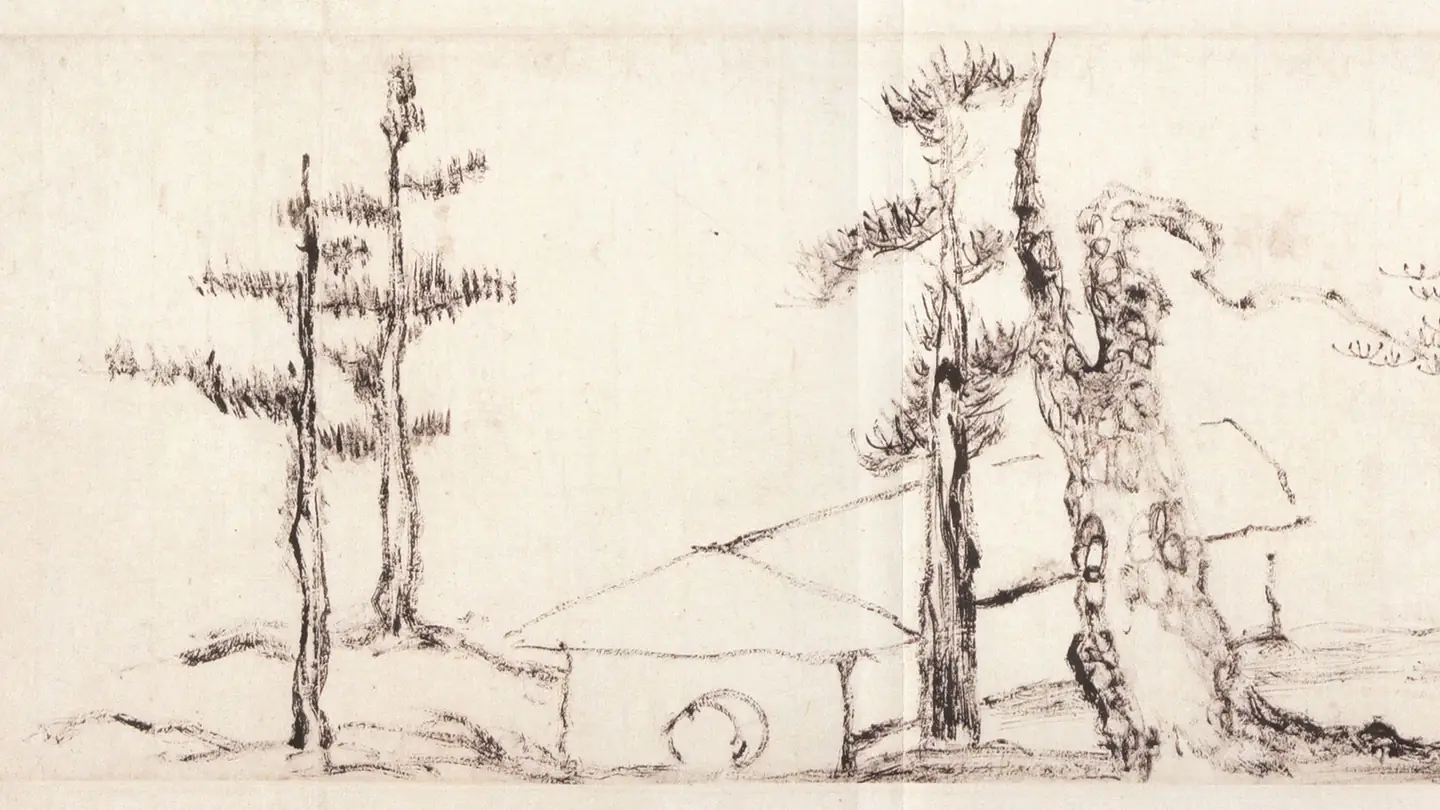
Cook Ding was only doing his own work, yet the king who heard his words learned how to nourish life.
Is there a Way that brings benefit without weighing benefit? On this road humankind has never walked, how will we make that Way?
Share your thoughts in the YouTube commentsKeep watching
Other games
 0112:22
Game 1·Schopenhauer×Hegel
Why You Crave Ramen at Midnight
 0213:44
Game 2·Zhuangzi×Turing
If AI Does All My Work, What Should I Do Next?
 0313:46
Game 3·Spinoza×Wonhyo
Why do we always regret it after we snap?
 0413:20
Game 4·Franklin×Keynes
Why Hard Work Alone Doesn't Make You Rich
 0511:12
Game 5·Sejong the Great×Leibniz
Could Writing Speech As It Is Change the World?
 0710:18
Game 7·Eckhart×Naong
What Gets You Through a Hard Day?
 0910:51
Game 9·Van Gogh×Hokusai
Is It Really Too Late?
 1110:18
Game 11·Yi Sun-sin×Aurelius